Archive
Plural Futures III: Implications
Colectivo Warehouse
SEMINAR
MAY 11TH OF 2026, 3PM
ATRIUM BETWEEN BUILDINGS EP1 – ESAD.CR
The Seminar Course of the Industrial Design Bachelor at ESAD.CR returns with a new cycle under the theme Plural Futures III: Implications, proposing a critical immersion into the contemporary conditions of design and the responsibilities that emerge from it.
Starting from the figure of the designer as both a critical subject and a producer of economic, material, and cultural value, this seminar positions itself as a transitional space between academic training and professional practice, questioning how designers act, decide, and position themselves within an
unstable, unequal, and technologically accelerated world.
Organised in an intensive format, with public forums featuring invited guests, the programme brings together different perspectives to discuss what design does and what it implies – across production systems, social structures, economies, and the ways of life it helps to shape.
This cycle proposes to think of design as a situated, political, and ethical practice, capable of anticipating scenarios, challenging established models, and actively participating in the construction of more conscious, sustainable, and plural futures. Between products, brands, systems, and narratives, the seminar establishes itself as a space for listening, confrontation, and critical positioning.
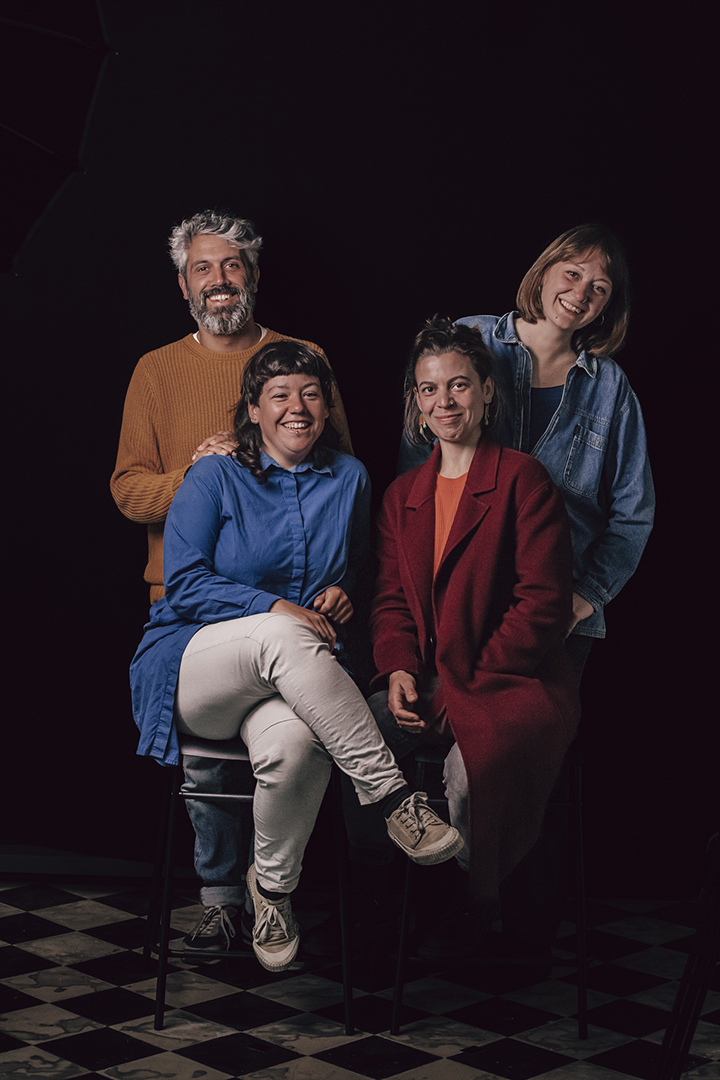
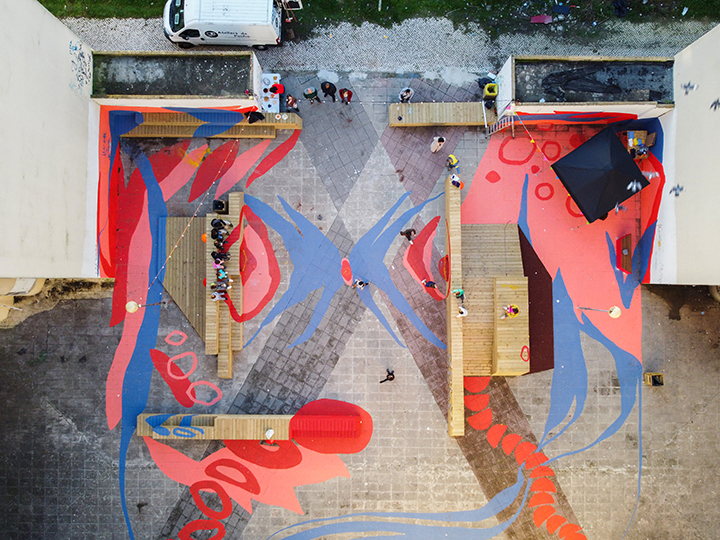
The Colectivo Warehouse is a Lisbon-based collective working in the fields of architecture, urban planning and design in connection with social and cultural projects, with a particular focus on public space and shared spaces, whether public or private.
The collective believes in co-creation as a means of building resilient communities, and in self-build as a catalyst for spatial appropriation, as well as in the civic and social empowerment of those involved. It also values the importance of process, horizontal collaboration, the sharing of experiences and resources, and non-formal, non-hierarchical forms of learning.
Since 2013, it has been working on different scales within a national and European network, combining multidisciplinary tools from architecture, tactical urbanism, urban sociology and construction, always seeking projects that have an impact on local areas.
Some of these projects have gained particular prominence, such as the Terras da Costa Community Kitchen, winner of the international Archdaily – Building of the Year 2016 award; the Habitabis Festival collaboration tool selected by the European Cultural Foundation R&D Grantee 2017; the collaboration with Construclab for Mons European Capital of Culture 2015 on the Mons Invisible – Jardin Suspensu project, amongst other national and international collaborations.
Throughout its practice, the Warehouse Collective has been invited as a tutor and speaker at workshops, summer schools, courses, seminars, articles and conferences