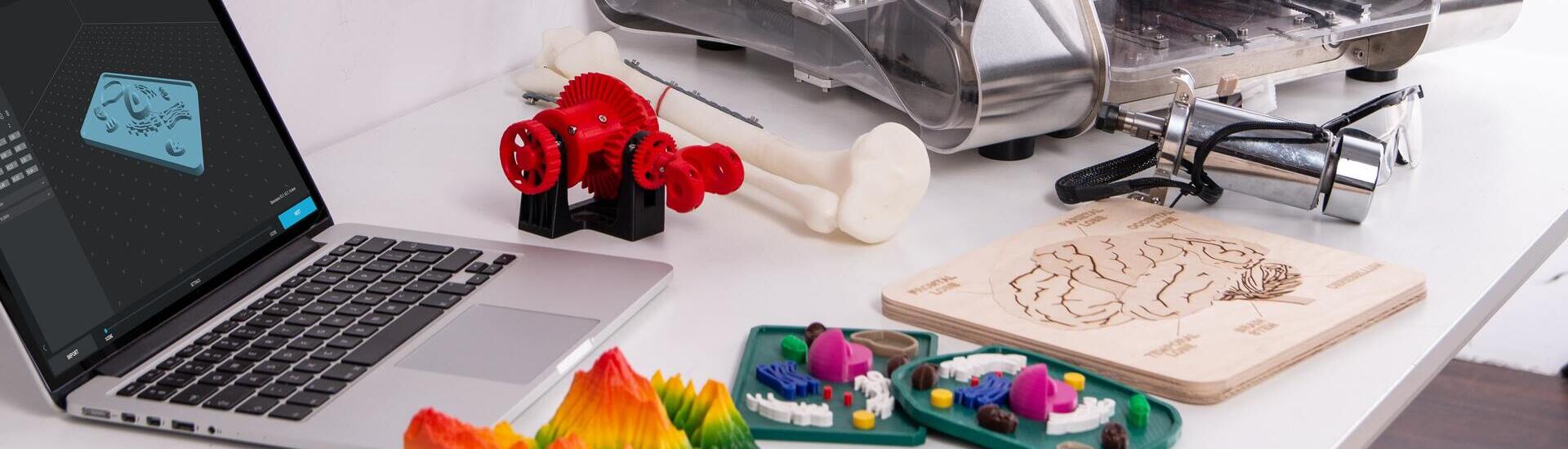
Engineering for Direct Digital Manufacturing
Engineering for Direct Digital Manufacturing
Programme Introduction
This International Master is designed to respond to the challenges of industry digitalization (Industry 4.0) through Direct Digital Manufacturing (DDM). It is supported by the PAMI Scientific Infrastructure, deepening the knowledge and skills in this emerging field in scientific, technological and societal challenges.
It will also allow to continue the 1st cycle training in engineering existing in IPLeiria and other higher education institutions, thus consolidating the 2nd cycle offer in engineering in IPLeiria.
It will contribute strongly to reinforce the partnership between academy and companies of the region through the application of good practices and industrial research to solve problems of medium and high difficulty. Graduates will have a considerable degree of autonomy, innovation, scientific and professional integrity, contributing for being R&D catalyst in the business environment.
Programme Coordinator
Milena Maria Nogueira Vieira
coord.mefdd.estg@ipleiria.pt
Reference
School
City
Language
Type
Length
Vacancies
General and International student contingent: 20
Notice
Edital 2026 (PT Doc retf)
Edital 2026 (retf 2v)
DGES certification
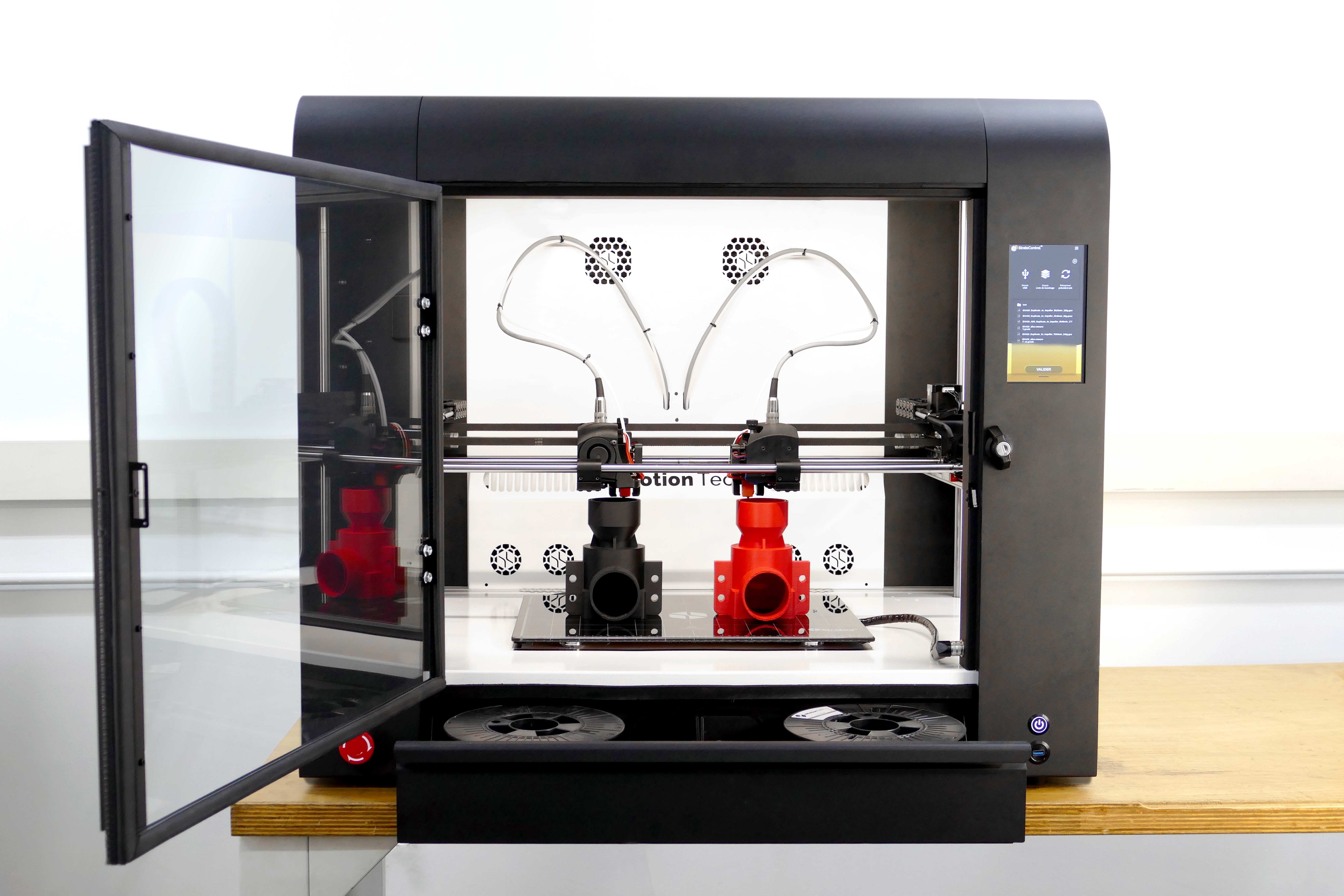
Objectives
This Master’s Degree aims to deepen students’ knowledge and skills in the emerging field of DDM, namely:
1) Understanding DDM processes and their role in the context of Industry 4.0;
2) Select DDM processes taking into account the materials, form, function and economic criteria;
3) Expand the universe of solutions for the design, development and materialization of products obtained by DDM technologies;
4) Select suitable materials for a given DDM process, considering the modification of physical or other properties during this process;
5) Apply the DDM processes in the scope of Industry 4.0, namely customized and personalized products, decentralization and digitalization of production, and modification of logistics chains;
6) Understand the social-level impacts resulting from generalized DDM processes;
7) Acquire professional skills and scientific research, including knowledge communication skills for both specialists and non-specialists.

| ID | Name | Semester | ECTS | Length |
|---|---|---|---|---|
| Introduction to Direct Digital Manufacturing and Future Challenges | S1 | 6 | T-30; OT-15 | |
|
1.DDM overview and technical and design challenges |
||||
| Direct Digital Manufacturing Technology I | S1 | 7 | TP-15; PL-15;OT-15 | |
|
1. Computer-integrated subtractive manufacturing technology: |
||||
| Introduction to Research | S1 | 5 | T-30;OT-15 | |
|
1. Basis of Scientific Research: |
||||
| High Performance Materials | S1 | 5 | T-15;PL-15;;OT-15 | |
|
1. Introduction to Materials: |
||||
| Experimental Methods for Material Characterization | S1 | 7 | TP-15;PL-15;OT-15 | |
|
1. Scales of Structure in Materials |
||||
| Direct Digital Manufacturing Technology II | S2 | 5 | TP-15; PL-15;OT-15 | |
|
1. Computational Methods for AM |
||||
| Materials for Direct Digital Manufacturing | S2 | 5 | T-15;PL-15;OT-15 | |
|
1. Overview of material types |
||||
| Electives | S2 | 5 | TP-15;PL-15;OT-15 | |
|
||||
| Research Methodologies | S2 | 5 | T-30; OT-15 | |
|
1. Sources of bibliographic research: use, applicability, ethical aspects |
||||
| Recycling | S2 | 5 | TP-15;PL-15;OT-15 | |
|
1. Introduction to recycling: |
||||
| Automation and Robotics | S2 | 5 | T-15;PL-15;OT-15 | |
|
1.General notions on automatic systems: |
| ID | Name | Semester | ECTS | Length |
|---|---|---|---|---|
| Electives | S1 e S2 | 60 | TP-60/E-60 | |
|
Entry Requirements
People who can apply to the Master’s Degree:
- Holders of an undergraduate degree or a legal equivalent in Mechanical Engineering, Materials Engineering, Electrical and Electronic Engineering, and similar areas;
- Holders of a foreign higher education diploma, granted after a first cycle of studies, under the principles of the Bologna Process, by a State, which has subscribed this Process, in Mechanical Engineering, Materials Engineering, Electrical and Electronic Engineering, and similar areas;
- Holders of a foreign higher education diploma that is recognized as meeting the objectives of an undergraduate degree by the Technical and Scientific Council of the School, in Mechanical Engineering, Materials Engineering, Electrical
and Electronic Engineering, and similar areas;
- Holders of an academic, scientific or professional
curriculum that is recognized as certifying the skills to attend this cycle of studies by the Technical and Scientific Board of the School of Technology and Management;
- Students who are close to completing their undergraduate degree in the field required for entering the Master’s degree, and declare it in their application.
.
People who can apply to the Master’s Degree:
- Holders of an undergraduate degree or a legal equivalent in Mechanical Engineering, Materials Engineering, Electrical and Electronic Engineering, and similar areas;
- Holders of a foreign higher education diploma, granted after a first cycle of studies, under the principles of the Bologna Process, by a State, which has subscribed this Process, in Mechanical Engineering, Materials Engineering, Electrical and Electronic Engineering, and similar areas;
- Holders of a foreign higher education diploma that is recognized as meeting the objectives of an undergraduate degree by the Technical and Scientific Council of the School, in Mechanical Engineering, Materials Engineering, Electrical
and Electronic Engineering, and similar areas; - Holders of an academic, scientific or professional
curriculum that is recognized as certifying the skills to attend this cycle of studies by the Technical and Scientific Board of the School of Technology and Management; - Students who are close to completing their undergraduate degree in the field required for entering the Master’s degree, and declare it in their application.
.
Accreditation
State: Accredited
Number of years of accreditation: 6
Publication date: 06/03/2026
State: Accredited
Number of years of accreditation: 6
Publication date: 06/03/2026
More Information
All information related to the international student application should be consulted on our International Students webpage.
Contacts
E-mail: studywithus@ipleiria.pt
All information related to the international student application should be consulted on our International Students webpage.
Contacts
E-mail: studywithus@ipleiria.pt

Application Fee
60€
Enrolment Fee
General Contingent: 50€
International student contingent: 100€
General Contingent: 50€
International student contingent: 100€
Tuition Fee
General Contingent: 697 €
International student contingent: 3000€
General Contingent: 697 €
International student contingent: 3000€
Online Application
Use the button bellow to start your application.