Product Design
Product Design
Programme Introduction
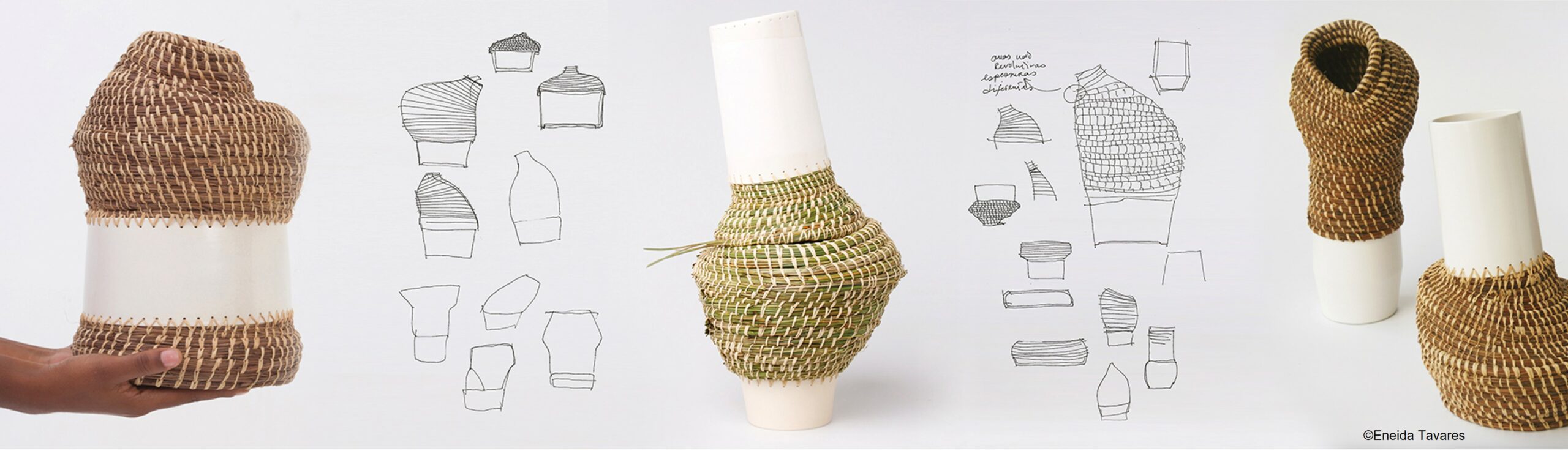
The Master’s is oriented toward structuring routes for individual projects, centered on the interest and motivations of the student. It intends to consolidate the critical sense, research capacity, and to structure an autonomous creative territory, as well responsible and interventionist professional practice in our globalized world’s social processes.
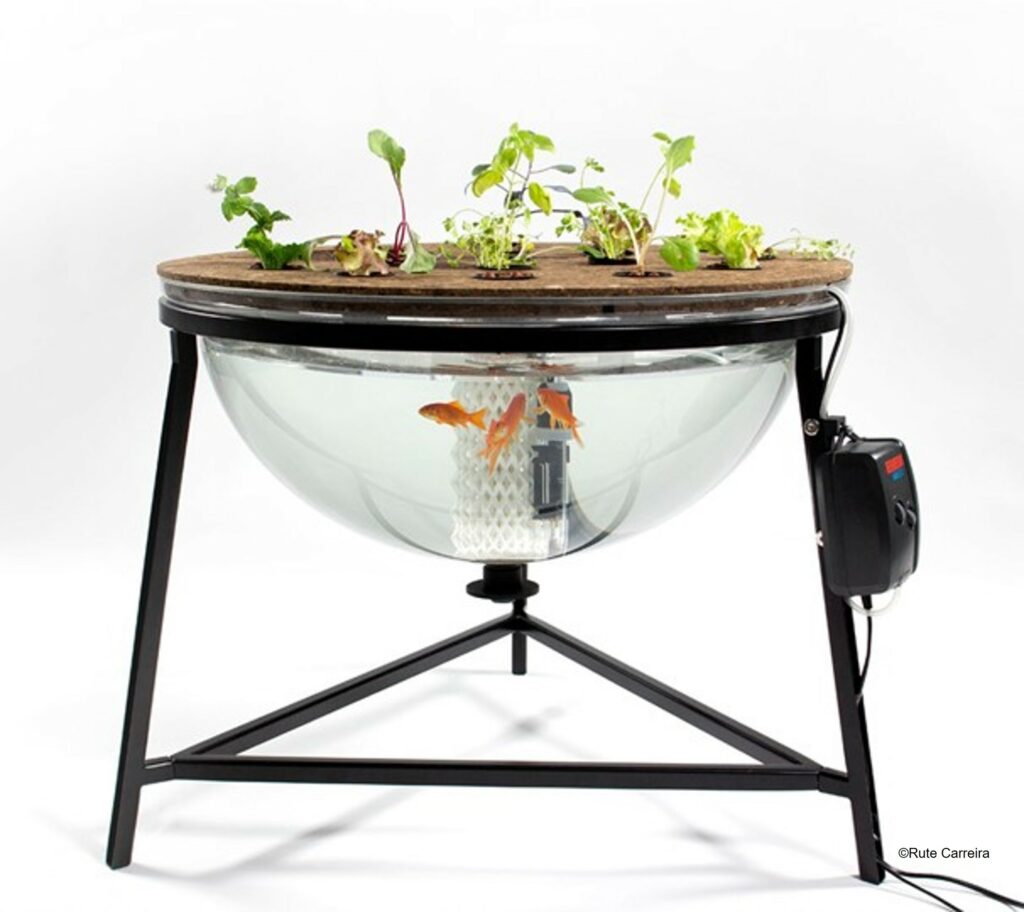
A design approach has been adopted for the project’s culture, wich promotes responsible and humanitarian use, seeking sustainable products in the consumer society. Research lines have been developed that enhance the social and cultural dimensions of products and the emotional and aesthetic relations that they establish with people. Its implementation is sought through partnership with thw community and with industry.
Programme Coordinator
José Vicente
jose.n.vicente@ipleiria.pt
Reference
School
City
Language
Type
Length
Vacancies
General and International student contingent: 25
Notice
Edital 2026 (PT Doc-Ret)
DGES certification
Objectives
This Master’s seeks to form professionals in the specific domain of product design, being capable of pursuing this professional activity in different production and research scnarios.
| ID | Name | Semester | ECTS | Length |
|---|---|---|---|---|
| 6620201 | Design Studio I | 1st Semester | 12 | 120 h |
|
B1. User centered design B2. Design for sustainability B3. Social design B4. Design for self-production B5. Experience design B6. Experimental and speculative methods B7. Prototyping for design and evaluation B8. Collaborative and participatory design methods B9. Sustainability assessment methodologies B10. Oral presentation and discussion B11. Graphic media B12. Scale Models B13. Models and prototypes B14. Contextual and white background product photography. B15. Setting-up an exhibition |
||||
| 6620202 | Drawing | 1st Semester | 9 | 60 h |
|
The main purpose of this assignment is to promote and programmatically develop its main pedagogical components operating through small blocks of practical work in the form of drawing exercises. To this end, this assignment will use a variety of teaching strategies of diverse complexity, depth and length – which rely on the implementation of the objectives of the assignment through permanent and creative conversational student participation. The contents are as follows: B1. Reading and understanding the visual world and its objects B2. The importance on the understanding of the genesis of the forms in objects B3. Drawing within the objects B4. The objects in the design process B5. The role of drawing in design |
||||
| 6620303 | Seminar (transdisciplinary) | 1st Semester | 9 | 60 h |
|
The programmatic contents are organized in seminars, organized in two major working platforms wich aim to reflect the current B1. Critical Design studies:B1.1 Design in academic context B1.2 Design, decolonization and collective imagination B1.3 Inclusive Design B1.4 Curatorship as Design B1.5 Design and Pedagogy B2. Technological processes and matter B2.1 Innovation and sustainability B2.2 Industry 4.0: Digital product optimisation B2.3 New manufacturing processes B2.4 Design for complex systems B2.5 UX and Human-Centered Design |
||||
| 6620204 | Design Studio II | 2nd Semester | 12 | 120 h |
|
B1. Diverging processes and creative release B2. Link between control and experimentation in design B3. Interdisciplinary and trans-disciplinary concepts B4. Degrees of freedom in design B5. Ethical and aesthetic positioning B6. Heuristic process B7. Map of references B8. Individual and cultural identity B9. Emotional relationship with the project B10. Emotional dimensions of use B11. Territories of design performance B12. Formulation of a work topic in design B13. Relevance to the project B14. Auto-production B15. Succinct application of the report model adopted in the MDP |
||||
| 6620205 | Design Research | 2nd Semester | 9 | 60 h |
|
B1. Design as knowledge |
||||
| 6620206 | Design and Strategy | 2nd Semester | 9 | 60 h |
|
B.1. General concepts. |
| ID | Name | Semester | ECTS | Length |
|---|---|---|---|---|
| 6620208 | Design Criticism | 1st Semester | 6 | 45 h |
|
B1. The function of design criticism |
||||
| 6620207 | Final Project I of the Master degree | 1st Semester | 24 | 15 h |
|
B1. The syllabus will be discussed and approved by the advisor according to the maturity and skills of the student and the nature of their individual project. |
||||
| 6620209 | Final Project II of the Master degree | 2nd Semester | 30 | |
|
B1. The syllabus will be discussed and approved by the advisor according to the maturity and skills of the student and the nature of their individual project. |
Entry Requirements
May apply for access to the cycle of studies:
-
Holders of a bachelor’s degree or legal equivalent in Industrial Design, Glass and Ceramic Design, Equipment Design, Product Design, Communication Design, Graphic Design, Multimedia Design, Interior and Space Design, Fine Arts, New Media, interested in pursuing studies in the area of Product and Industrial Design;
-
Holders of a foreign academic bachelor’s degree following a 1st cycle of studies organized according to the principles of the Bologna process in Product and Industrial Design and related areas;
- Holders of a foreign bachelor’s degree that is recognized as meeting the objectives of a degree by the Scientific-Technical Council of ESAD.CR;
-
Holders of an academic, scientific or professional curriculum which is recognized as attesting the capacity to carry out this cycle of studies by the Scientific-Technical Council of ESAD.CR.
International Student
All information related to the international student application should be consulted on our International Students webpage.
May apply for access to the cycle of studies:
-
Holders of a bachelor’s degree or legal equivalent in Industrial Design, Glass and Ceramic Design, Equipment Design, Product Design, Communication Design, Graphic Design, Multimedia Design, Interior and Space Design, Fine Arts, New Media, interested in pursuing studies in the area of Product and Industrial Design;
-
Holders of a foreign academic bachelor’s degree following a 1st cycle of studies organized according to the principles of the Bologna process in Product and Industrial Design and related areas;
- Holders of a foreign bachelor’s degree that is recognized as meeting the objectives of a degree by the Scientific-Technical Council of ESAD.CR;
-
Holders of an academic, scientific or professional curriculum which is recognized as attesting the capacity to carry out this cycle of studies by the Scientific-Technical Council of ESAD.CR.
International Student
All information related to the international student application should be consulted on our International Students webpage.
Accreditation
State: Accredited
Nº of years of accreditation: 6
Publication date: 24-05-2023
Accreditation A3ES
State: Accredited
Nº of years of accreditation: 6
Publication date: 24-05-2023
Accreditation A3ES
More Information
Contacts
E-mail: studywithus@ipleiria.pt
Contacts
E-mail: studywithus@ipleiria.pt
Application Fee
60€
60€
Enrolment Fee
General contingent: 50€
International student contingent: 100€
General contingent: 50€
International student contingent: 100€
Tuition Fee
General contingent: 1140€
International student contingent: 3000€
General contingent: 1140€
International student contingent: 3000€
Online Application
Use the button bellow to start your application.