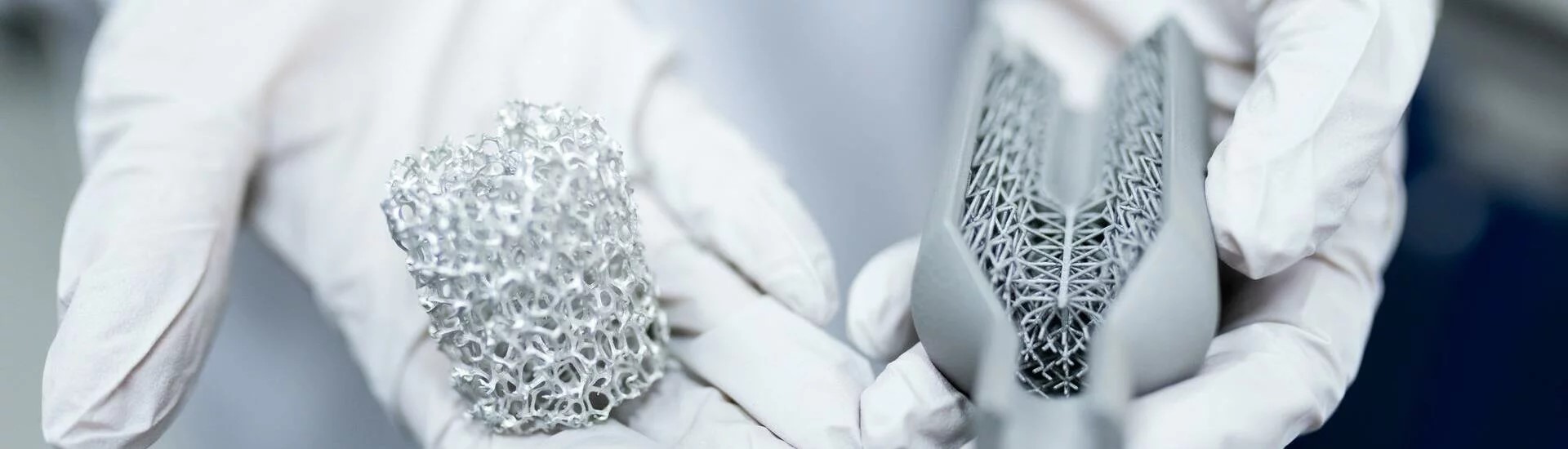
Direct Digital Manufacturing for Polymer and Tooling Industries
Direct Digital Manufacturing for Polymer and Tooling Industries
Programme Content
The study cycle will be taught at the University of Minho, Azurém Campus, Guimarães, and at the Polytechnic Instituteof Leira, Leiria. Classes will be taught a live to one group of students and attended remotely by another group. Thecurricular units will be shared by professors from the University of Minho and the Polytechnic Institute of Leira.
Programme Introduction
The study programme’s generic objectives are the training highly qualified human resources at the forefront of the scientific field specific to Direct Digital Manufacturing, FDD, in the polymer and mould industries, integrating technologically advanced companies and entities, andstimulating and fostering the sustainable development and progress of the industy, of European Research Area and ofthe Society, in general, based on knowledge. This PhD programme ains also to adapt the training of doctoral students to the exercise of an increasingly multidisciplinary scientific and professional activity, carried out in working groups of high demand and competitiveness and support the consolidation of the competitiveness and technology hubs and relevant industrial sectors in thesetechnologies.
Programme Coordinator
Joel Oliveira Correia Vasco
coord.dfddipm.estg@ipleiria.pt
School
City
Language
Length
Vacancies
General Contingent: 12
International Contingent: 3
Notice
Despacho Reitoral Conjunto 2026/2027 (PT Doc)
DGES certification
Objectives
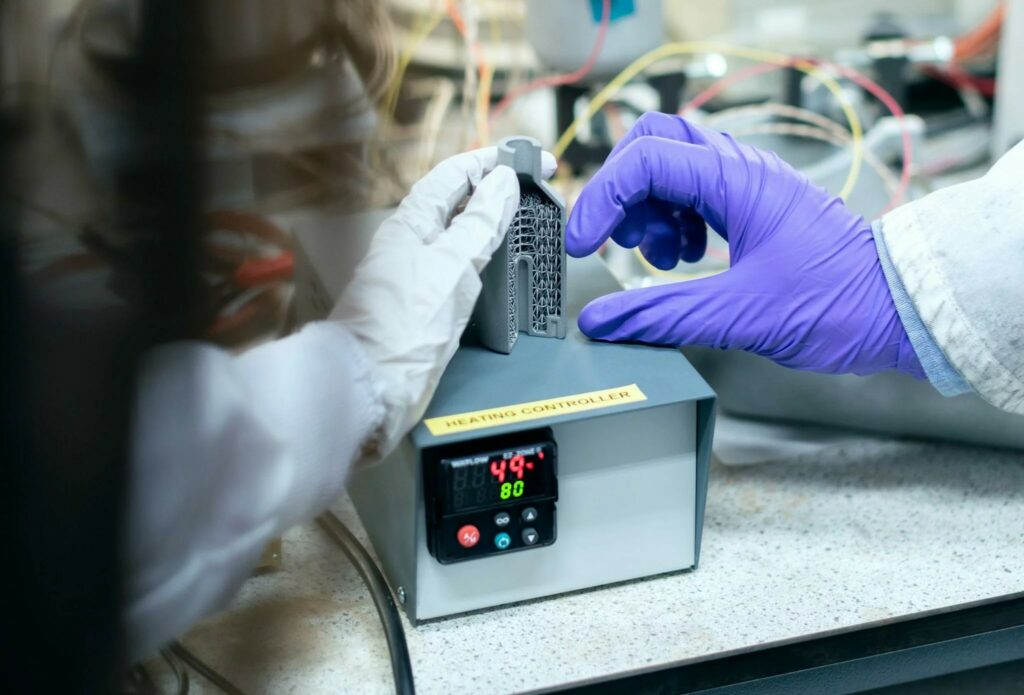
- Describe manufacturing technologies for specific applications in products manufactured by Direct Digital Manufacturing;
- Distinguish materials and manufacturing technologies for products manufactured by Direct Digital Manufacturing;
- Select materials and manufacturing technologies for specific applications in products manufactured by Direct DigitalManufacturing;
- Model products for Direct Digital Manufacturing;
- Design products for Direct Digital Manufacturing;
- Manufacture products by Direct Digital Manufacturing;
- Plan product development projects for Direct Digital Manufacturing;
- Evaluate product development projects for Direct Digital Manufacturing;
- Manage product development projects for Direct Digital Manufacturing.
Careers Options
This study cycle will aim to tailor the training of doctoral students to the demands of a highly challenging multidisciplinary scientific and professional activity, and will support the consolidation of competitiveness and technology hubs, as well as relevant industrial sectors.

| ID | Name | Semester | ECTS | Length |
|---|---|---|---|---|
| Thesis Planning | 1S | 20 | 45 h | |
|
C2. Simulation tools applicable to Direct Digital Manufacturing products and / or systems; |
||||
| Economic, environmental and social challenges of direct digital manufacturing | 1S | 5 | 45 h | |
|
C1. Challenges and opportunities of Direct Digital Manufacturing |
||||
| Multi-Scale Design for Direct Digital Manufacturing | 1S | 5 | 45 h | |
|
C1. Standards for Direct Digital Manufacturing; |
||||
| Trends in materials for direct digital manufacturing | 1S | 5 | 45 h | |
|
C1. Framework of technologies of Digital Direct Manufacturing and materials. |
||||
| Trends in manufacturing technologies for direct digital manufacturing | 1S | 5 | 45 h | |
|
C1. Introduction to the fundamentals of Direct Digital Manufacturing technologies (additive, subtractive, formative andhybrid) |
||||
| Advanced Seminars in Direct Digital Manufacturing | 1S | 5 | 45 h | |
|
C1. A new paradigm: Prospective and comparative analysis of developments and trends in digital manufacturingsolutions, in the context of the digital transformation and subsequent industrial revolution underway, integratinghuman, technological, quality, logistics, environmental and organizational aspects as well as concepts. of the design ofthe components / systems to be manufactured. |
| ID | Name | Semester | ECTS | Length |
|---|---|---|---|---|
| Thesis | Annual | 150 |
Entry Requirements
- Holders of the Master of Engineering degree or legal equivalent.
- Holders of a 5-year degree in Engineering or related fields, or legal equivalent, provided they hold a particularlyrelevant academic or scientific curriculum that is recognized as attesting the ability to undertake this cycle of studiesby the Scientific Council of the School of Engineering.
- Holders of a academic, scientific or professional curriculum, which is recognized by the Scientific Council of theSchool of Engineering as attesting ability to undertake this cycle of studies.
- Candidates who meet one of the requirements in b) and c) of point 1 of article 30) / of Decreto Lei 65/2018 of 16August.
- Holders of the Master of Engineering degree or legal equivalent.
- Holders of a 5-year degree in Engineering or related fields, or legal equivalent, provided they hold a particularlyrelevant academic or scientific curriculum that is recognized as attesting the ability to undertake this cycle of studiesby the Scientific Council of the School of Engineering.
- Holders of a academic, scientific or professional curriculum, which is recognized by the Scientific Council of theSchool of Engineering as attesting ability to undertake this cycle of studies.
- Candidates who meet one of the requirements in b) and c) of point 1 of article 30) / of Decreto Lei 65/2018 of 16August.
Accreditation
State: Accreditated
Number of years of acrreditation: 6
Publication Date: 31/07/2020
State: Accreditated
Number of years of acrreditation: 6
Publication Date: 31/07/2020
More Information
1st Phase 2nd Phase 3rd Phase Applications 13 a 20 de abril de 2026 4 a 15 de julho de 2026 3 a 10 de setembro de 2026
For more information, please contact:
António José Vilela Pontes (Universidade do Minho)
pontes@dep.uminho.pt
Joel Vasco (Politécnico de Leiria)
joel.vasco@ipleiria.pt
| 1st Phase | 2nd Phase | 3rd Phase | |
|---|---|---|---|
| Applications | 13 a 20 de abril de 2026 | 4 a 15 de julho de 2026 | 3 a 10 de setembro de 2026 |
For more information, please contact:
António José Vilela Pontes (Universidade do Minho)
pontes@dep.uminho.pt
Joel Vasco (Politécnico de Leiria)
joel.vasco@ipleiria.pt
Tuition Fee
General Contingent: 2750€
International Contingent: 4000€
General Contingent: 2750€
International Contingent: 4000€

Online Application
Use the button bellow to start your application.