
Researchers at the Polytechnic University of Leiria develop an innovative forest fire prevention system
Researchers at the Polytechnic University of Leiria develop an innovative forest fire prevention system
The Computer Science and Communications Research Centre (CIIC) of the Polytechnic University of Leiria presented the final results of the project ‘DBoidS – Digital Twins and Boids System for Fire Prevention’ through a practical demonstration of the system, held at Lagoa da Ervedeira, in Leiria, on 26 June 2025.
On June 27, the final workshop took place under the theme ‘Technology in the Prevention of Rural Fires and the Preservation of Forests’, with the aim of presenting the project results and fostering discussion on the potential of emerging technologies and the regional challenges involved in the prevention and control of forest fires.
Launched in 2022 with funding from the Portuguese Foundation for Science and Technology (FCT) (PTDC/CCI-COM/2416/2021), the project focused on developing solutions based on emerging technologies—such as drone swarms deployed on missions, digital twins, artificial intelligence and real-time object tracking—to predict, prevent and support firefighting operations in forest fire scenarios.
“This project was developed over the past three years with the aim of addressing a gap in forest fire prevention. Existing projects tended to focus mainly on prevention, suppression and the post-fire phase, whereas DBoidS also operates at the prediction stage. Given that in 2020 Portugal was the second country in Europe with the largest burned area, and that in 2017 it was the European Union country affected by the most severe forest fires, we considered it imperative to find solutions to minimise both the number of forest fires and their secondary impacts,” explained António Pereira, a lecturer at the Polytechnic of Leiria and the project’s principal investigator, developed in partnership with INESC TEC – Institute for Systems and Computer Engineering, Technology and Science.
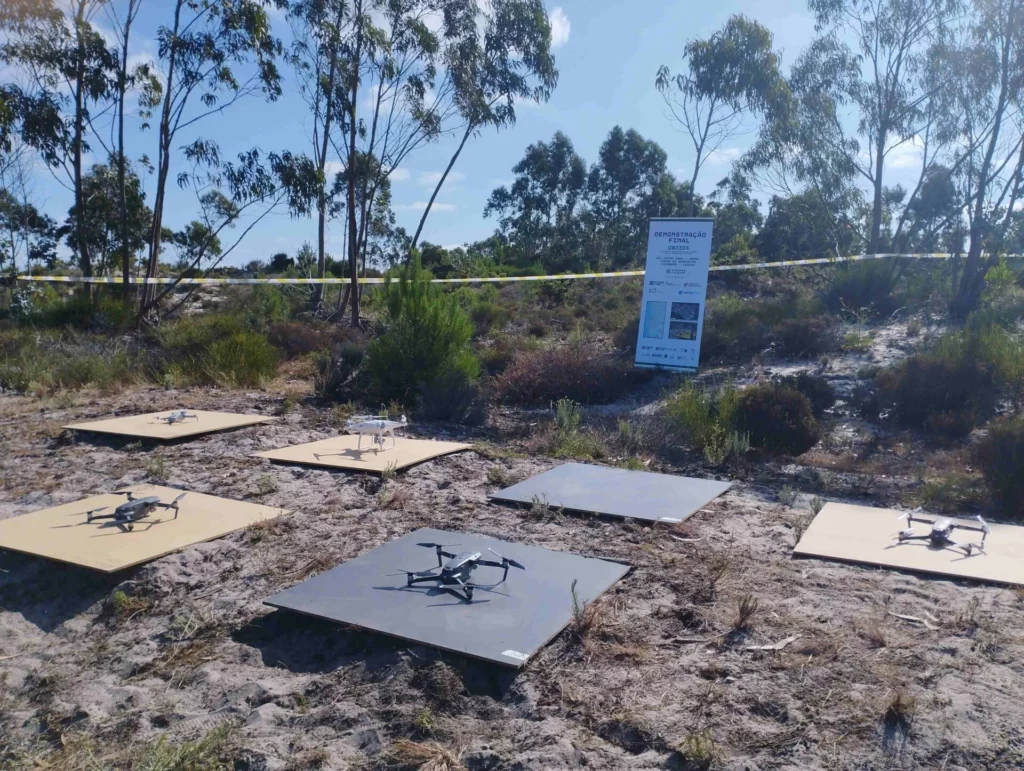
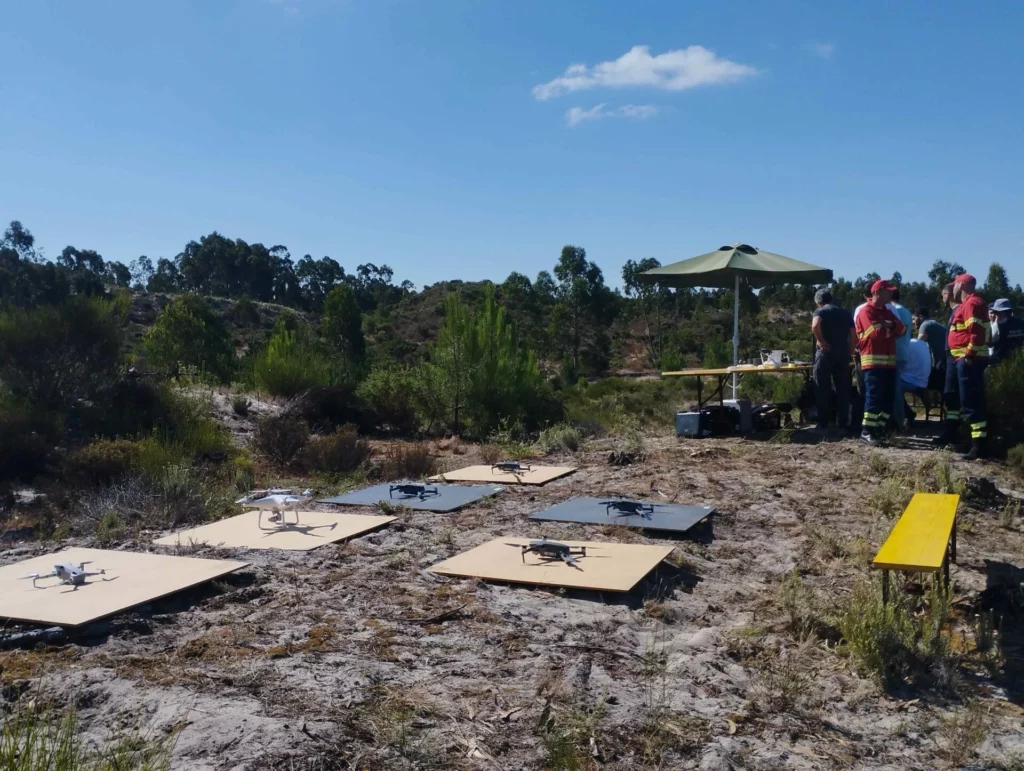
Although its main focus is the prediction and prevention of fires—through a system that uses drones to collect information about the area under surveillance, together with weather-forecast data, to calculate an overall fire risk index and identify ignition hotspots in forested areas—DBoidS can also support firefighting during and after fire events. It does so by providing valuable information about the areas concerned (based on previous knowledge) and updated simulations to help determine the fire’s likely progression and consequences.
For the President of the Polytechnic University of Leiria, the DBoidS project helps address several challenges that persist in Portugal. “Our country faces a particularly sensitive context when it comes to forest fires. Despite progress in monitoring, prevention and suppression systems, challenges remain. It is therefore imperative to adopt an integrated approach involving the State, local authorities, landowners, researchers and civil society, strengthening structural prevention, environmental education and land-use planning as fundamental pillars to mitigate the risk and impacts of forest fires in Portugal,” argues Carlos Rabadão.
The project benefited from the collaboration and support of the National Emergency and Civil Protection Authority (ANEPC), Guarda Nacional Republicana (GNR), Polícia Judiciária (PJ), Agency for Integrated Management of Rural Fires (AGIF), Institute for Nature Conservation and Forests (ICNF) and Leiria City Council (CML).