Digital Games Development
Digital Games Development
Programme Introduction
Our Master’s programme in Digital Games Development offers two specialised tracks — Game Arts and Game Programming — and is taught entirely in English. With over 11 years of experience in Game Development education we have built a strong reputation supported by more than 50 student awards, including over 40 from PlayStation Talents, as well as recognitions from Nordic Game Discovery Contest, Indie X, Game Dev Lisbon Spotlight Awards, and other international competitions.
As an international programme, the exclusive use of English not only facilitates collaboration among students from diverse cultural backgrounds but also ensures full preparation for work and research in global contexts within the games industry.
Both specialisation areas cover the entire video game production pipeline, from concept to release.
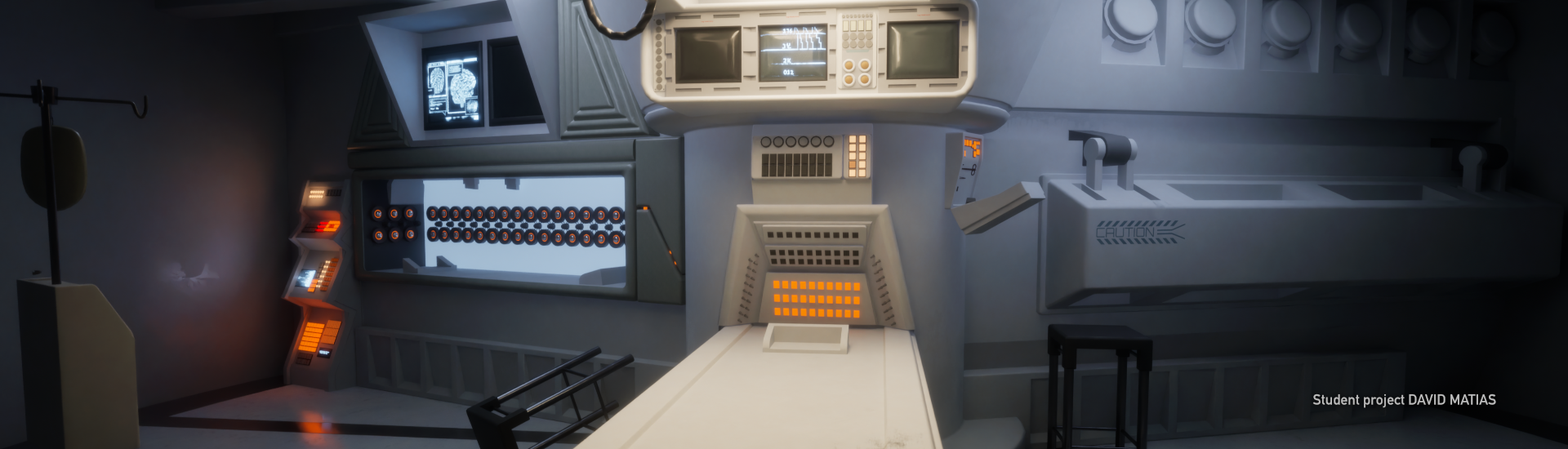
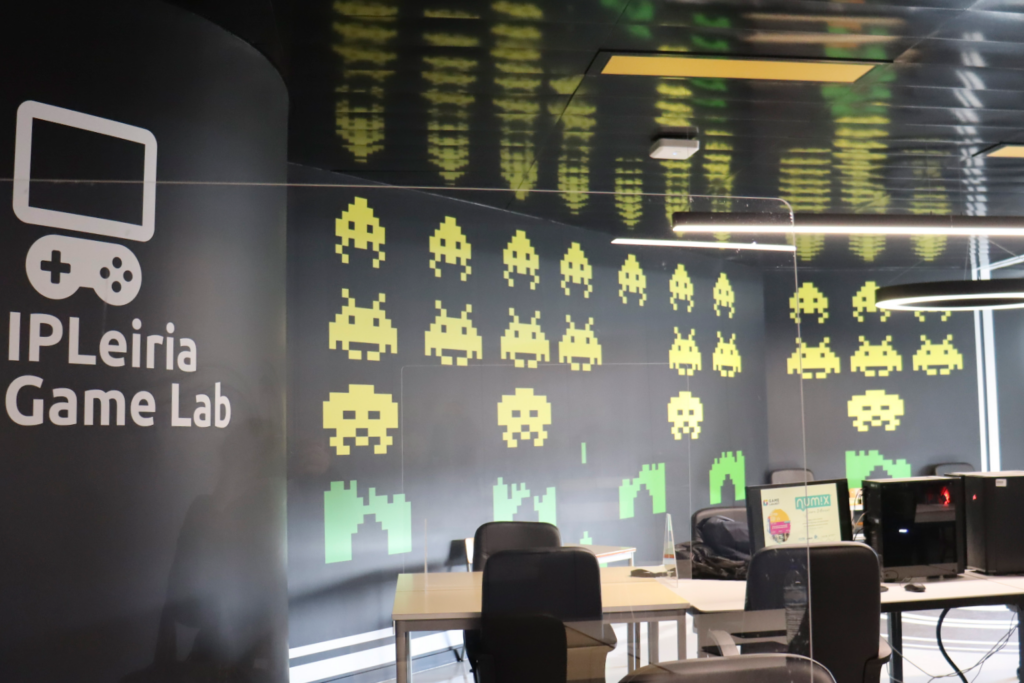
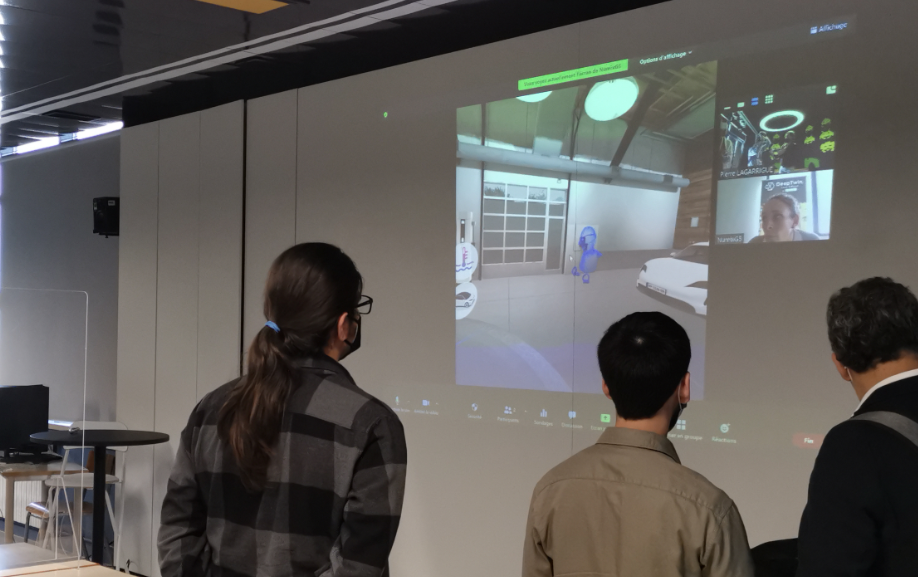
Students have access to six dedicated Game Labs, designed to replicate the conditions of professional game development studios. These labs are equipped with high-performance development stations, a playtest zone, and other specialised facilities, providing an authentic and inspiring environment for creative experimentation and teamwork.
Check out our games
The school maintains close collaboration with the games industry, creating professional opportunities and ensuring that student projects achieve visibility beyond the academic sphere.
The programme makes use of industry-standard software and hardware, such as Unreal Engine – specifically focused on the latter for 3D work – Blender, Maya, Adobe Creative Suite and Figma, allowing students to gain proficiency in the same tools used by studios worldwide.
Students can also benefit from internship opportunities both in Portugal and abroad. Internships may be carried out in European companies for up to six months, with financial support, strengthening students’ professional experience and international connections.
This Master’s degree prepares graduates to become game artists, programmers, or researchers capable of contributing to both national and international markets. Applicants are expected to bring prior knowledge in either 3D art or programming.
This Master’s is the ideal choice for students who have already completed a Bachelor’s degree in Game Development and wish to specialise further in either Game Art or Game Programming — choosing one of these tracks to take their expertise to the next level.
The curriculum emphasises collaboration between artistic and technical profiles. Students learn through hands-on projects, benefit from guidance by experienced professionals, and develop the ability to work across disciplines. This approach provides both the creative and analytical skills needed to succeed in the games industry.
Students and faculty are actively involved in the creation and participation of national and international events in the field of digital games, including conferences, festivals, game jams, and exhibitions. The programme also benefits from an active Student Association, which plays a key role in organising events, supporting new students in their integration process, and fostering a welcoming and collaborative community.
Although Leiria is not one of Portugal’s largest cities, it provides an ideal environment for students, offering excellent living conditions and a strong sense of inclusion. The city is widely recognised for its affordable cost of living, safety, peaceful atmosphere, quality education, and proximity to Portugal’s coastline, making it a vibrant and balanced place to study and live.
To know this master programme, please take a peek at our students’ work:
Programme Coordinator
Maria Eduarda Moreira Abrantes Ferreira da Silva
coord.mdjd.estg@ipleiria.pt
School
City
Language
Type
Length
Vacancies
General and International Contingent: 40
Notice
Edital 2026 (PT Doc retf)
Edital 2026 (EN Doc retf)
DGES certification
Objectives
- Develop advanced skills in innovation and digital game creation, aligned with industry needs.
- Encourage graduates to apply research and best practices within the video game sector.
- Train specialised professionals ready to take on leadership roles and contribute to the growth of the industry nationally and internationally.
- Promote interdisciplinarity, creativity, and proficiency in the most relevant technologies for game development.
- Offer excellence-driven training in Game Art or Game Programming, enabling students to specialise in one of these key areas of video game production.
Careers Options
- Game Programmer
- Games Artificial Intelligence Programmer
- Virtual Reality/Augmented Reality Developer
- Games Network Programmer
- Game Tools Programmer
- Mobile Games Programmer
- Technical Artist
- 3D Artist
- 3D Animator
- 3D Character Animator
- UX/UI Designer for Games
- Art Director
| ID | Name | Semester | ECTS | Length |
|---|---|---|---|---|
| Game Studies | 1S | 6 | 45 h | |
|
This course aims to foster games’ analysis from a comprehensive variety of angles and applications, from a conceptual and critical approach, targeted for a deep understanding on the games’ role in society. Syllabus
|
||||
| Game and Level Design | 1S | 6 | 45 h | |
|
This course aims to provide the knowledge, the methods, and tools to create engaging and effective video games. Through systematic design techniques, students will learn how to effectively build and communicate new game ideas. Syllabus 1. Game Concepts 1.1. Video Games for Usability and Playability 1.2. The Game Development Life Cycle 1.3. Storytelling and Narrative Pacing 2. Game Design 2.1. Fundamentals of Game Design Theory 2.2. Design Choices Based on Design Theory 2.3. Conceptualising Game Mechanics and Gameplay 2.4. Player Feedback Mechanisms 2.5. Creation of Game Design Documents 3. Level Design 3.1. Level Design Workflow 3.2. Fundamentals of Composition in Level Design 3.3. Efficiency in Level Design 4. Video Game Prototyping 4.1. Methods for Prototyping Game Concepts 4.2. Visual Scripting Languages Within a Game Engine 4.3. Developing Game Mechanics Within a Game Engine |
||||
| Immersive and Automated Sound Design | 1S | 6 | 45 h | |
|
This course aims to enhance proficiency in advanced game audio techniques, focusing on spatial audio and sound synthesis. Syllabus 1. Spatial Sound 1.1. Ambisonics reproduction and recording 1.2. Binaural and advanced acoustics for digital games 1.3. Binaural and Ambisonics for Virtual Reality 2. Interactive sound and sound synthesis 2.1. Audio file playback control 2.2. Sound synthesis and sound processing 2.3. I/O: MIDI, OSC, Sensors 2.4 Sound synthesis and processing applied to digital games 2.5 Sound synthesis and processing for interactive installations. 3. Audio for digital games 3.1 Music Systems 3.2 Ducking 3.3 Optimization |
||||
| UI / UX Design | 2S | 6 | 45 h | |
|
This subject is focused on user-cantered design methodologies applied to the digital creation process of user interfaces for digital games. Students will understand how to conceptualise and create user interfaces by following best practices of user experience design (UX) and user interface design (UI) as well as providing consistency and usability to the UI, bringing the best experience possible – visual and audible. New frontiers of user interface design for digital games will be explored trying to discover new opportunities for increasing the digital experience of a player while playing a game, exploring new technologies and critical topics. Syllabus: 1. User Interface Design for Digital Games: Theories and Practice 2. New Frontiers of User Interface Design 3. Immersive User Interfaces 4. Immersive Tutorials 5. User Research 6. Inclusive UI/UX in Digital Games 7. User Experience Design (UX) 8. Mockups, Flow and Interaction Prototyping 9. User Interface Design (UI) 10. Visual Design – UI Kit 11. Animation and Sound for User Interfaces |
||||
| Immersive Games | 2S | 6 | 45 h | |
|
This course aims to dwell on the latest immersive technologies to explore a wider view of games and society. Using immersive technologies such as AR/VR, students will learn the basics on how to create games for a variety of purposes. Syllabus 1. Immersive Interactive Experiences 1.1. The Human Senses 1.2. Immersive Game Design 1.3. Immersive Narratives 2. VR Technologies 2.1. VR Equipment 2.2. Visualization Techniques 2.3. VR Experience Design 2.4. Interaction in VR 2.5. Critical Analysis and Evaluation 3. AR Technologies 3.1. Tools for AR Development 3.2. AR Experience Design 3.3. Key Aspects of AR for Game Creation |
||||
| Technical Art | 2S | 6 | 45 h | |
|
This course aims to combine the students’ artistic abilities with the technical skills of computer graphics. This course is a practical approach to facilitate the teamwork between game designers, programmers, and artists in the game production pipeline, as well as to increase proficiency in the graphics pipeline. Syllabus 1. Technical Art Fundamentals 1.1. The Roles of a Technical Artist 1.2. Production Pipeline from Concept to Engine 1.3. Workflow Guidelines across the Production Process 2. Fundamentals of Graphics Pipelines 2.1. Real-time Visual Effects Techniques 2.2. Shader Fundamentals 2.3. Introduction to Scripting 3. Technical Tools 3.1. Technical Art Procedures and Methodologies 3.2. Procedural Tools for Real Time Game Mechanics 3.3. World Building Techniques 4. Optimization and Efficiency 4.1. Automating the Asset Pipeline 4.2. Human Error and Redundant Task Analysis 4.3. Optimal Performance of the Game’s Assets |
| ID | Name | Semester | ECTS | Length |
|---|---|---|---|---|
| 3D Game Programming | 1S | 6 | 45 h | |
|
This course intends to provide solid knowledge of the basic pillars of game development, u supported by the use of a contemporary 3D game engine. Syllabus 1.Contemporary Game Engines 2. Game Engines Lifecycle 3. Games Physics 3.1. Collisions and Triggers 3.1. Rigid Body Dynamics 4. Notions of Event-Based Programming 5. Multimodal Input Systems 6. Programming Character Animation 6.1. State Machines 6.2. Blend Spaces 6.3. Rigged Meshes 7. User Interface 8. Audio |
||||
| Game Network Programming | 1S | 6 | 45 h | |
|
This course intends to provide knowledge in more advanced game development topics, focusing on building game networks to support multiplayer games. Also, this course intends to provide knowledge in the use of C++, as programming language applied to game development. Syllabus 1.Game Programming with C++ 2. Procedural Animation 2.1. Ragdolls 2.2. Inverse Kinematics 3. Performance Analysis 3.1. Games Profiling 3.2. Optimization Techniques for Games 4. Plugin Development 5. Multiplayer Game Development and Networking 6. Anti-Cheat Engineering |
||||
| Multiplatform Game Development | 2S | 6 | 45 h | |
|
This course intends to provide knowledge for the creation of games for different development platforms, such as mobile and XR, supported by the exploration of advanced game programming topics using a contemporary game engine. Syllabus 1.Multiplatform Game Development 2. Notions of Game Programming Design Patterns 3. Notions of Mobile and XR Development 4. Programming Standards and Best Practices 5. GameObject Component System 6. Entity Component System 7. Code Architecture 7.1. MonoBehavior based 7.2. Scriptable Objects based 8. Immersive Audio |
||||
| Artificial Intelligence for Games | 2S | 6 | 45 h | |
|
This course aims to provide knowledge in the use of Artificial Intelligence applied to game development. Students will utilize a contemporary game engine, its tools, and C++ as the programming language for game development. Syllabus 1.AI Technologies for Games 2. Intelligent agents 2.1. Sensing and Perception 2.2. Decision Making 3. Pathfinding (Nav Mesh Navigation) 4. Behaviour trees and Blackboards 5. Search Algorithms 6. Minimax algorithm and alpha-beta pruning 7. Genetic Algorithms and Neural Networks 8. Notions of Flocking and Herding Behaviours |
| ID | Name | Semester | ECTS | Length |
|---|---|---|---|---|
| Environment Art | 1S | 6 | 45 h | |
|
In this subject the student will get a thorough understanding of the creation of environments for digital games, getting a deeper knowledge of texturing, scale, perspective and lighting. The student will get the necessary skills to create complex backgrounds, layouts, props, and environments. Syllabus: 1. Introduction and Blocking Out 2. Concept Art – Environment and objects 3. Greyboxing and Modeling Composition Techniques 4. Game Engine – Lighting: Artificial and Real 5. Tileable Textures 6. Baking and Unwrapping 7. Details 8. Blender and Environment Art 9. Photogrammetry 10. Decals and Their Uses 11. Post Process Effects |
||||
| Animation for Games | 1S | 6 | 45 h | |
|
In this subject the student will get a thorough understanding of animation for digital games, getting a deeper knowledge of how to apply animation theories, knowing the working process to implement them in a game engine at the same time as making a character feel alive and dynamic though animation techniques that can be applied to other game objects. Syllabus: 1. Animation and Games 2. Animation Theories and Game Design: Weight, Timing and Spacing 3. In-Game Animation Workflow 4. Script, Storyboarding and Animatic 5. Body Mechanics 6. Character Animation 7. Rigging for Game Engines 8. Keyframe vs. Motion Capture Animation 9. Adding Animated characters to a Game Engine 10. Performance Optimization, Interaction and Refinement |
||||
| Character Art | 2S | 6 | 45 h | |
|
In this subject the student will get a thorough understanding of the creation of 3D high-quality characters for digital games, getting a deeper knowledge of proportions, anatomy, personality, sculpting, texturing, and lighting. The student will get the necessary skills to create complex characters and putting them into a game engine. Syllabus: 1. Introduction to Character Art Workflow for Digital Games 2. Character Concept Art – Adapt to Different Visual Styles 3. Character Sheet 3. Hi-res Sculpting 4. Adding Details: Hair, Clothing 5. Retopology / Low Resolution modelling, UV Layout 6. Assembling / Baking 7. Painting / Texturing / PBR workflow 8. Camera setup, Lighting and Rendering 9. Apply to a Game Engine |
||||
| Character Animation | 2S | 6 | 45 h | |
|
In this subject the student will get a thorough understanding of the animation of high-quality characters in 3D for digital games, getting a deeper knowledge of personality, weight, charisma, emotion and choreography through animation methods. The student will get the necessary skills to animate complex characters and using them in Unreal Engine. Syllabus: 1. Posing for Games 2. Real-World Weight, Physics and Object Interaction 3. Dynamic Motions – Rhythm, Balance 4. Advanced Body Mechanics, actions and reactions performances 5. Animation Asset Creation for Gameplay 6. Animation Combos – Combining a Sequence of Animations 7. Choreography for Multiple Characters: Combat, Takedowns 8. Pantomine Animation 9. Facial Animation Setup and Lip-sync Animation 10. Camera setup, Lighting and Rendering |
| ID | Name | Semester | ECTS | Length |
|---|---|---|---|---|
| Research Methods for Games | 1S | 6 | 45 h | |
|
This course aims to promote the development of skills such as scientific writing, methodological design, scientific communication, and research opportunities. Also, this course rises awareness of the relevance of the ethical dimension and in developing standards of practice consistent with the best research practices in the game development area. Syllabus 1. Scientific Writing and Communication 1.1. Structural Components of Scientific Documents 1.2. Bibliographic Citation Procedures and Techniques 1.3. Critical Review in Games Research 1.4. Game Research Project Communication 2. Methodological Design and Research 2.1. Research Objectives, Questions, and Hypotheses 2.2. Methodological Designs 2.3. Research Validity 3. Collecting, Analysing and Presenting Data 3.1. Techniques and Instruments of Data Collection 3.2. Questionnaire Formulation 3.3. Data Analysis 4. Reflection and Ethical Awareness 4.1. Games in Research 4.2. Ethical Considerations in Research 4.3. Ethical Procedures in Games Research |
||||
| Internship / Project / Thesis | 1S and 2S | 46 |
| ID | Name | Semester | ECTS | Length |
|---|---|---|---|---|
| Game Programming Project | 1S | 8 | 60 h | |
|
In this subject the student will apply the acquired knowledge to develop a project using a contemporary game engine that can be presented in their portfolio, focusing on game programming. Syllabus 1.Production Pipeline for Game Programmers 2. Notions of Game Project Management 3. Notions of Post-Launch Games Research 4. Conventions 4.1. Project Structure 4.2. Organization and Naming Conventions 5. Source Code Management 5.1. Version Control Technologies 5.2. Integration and Cloud Platforms 6. Development of a Digital Game Project 6.1. Game Mechanics 6.2. Game Systems 6.3. Game Physics 6.4. Animation Programming 6.5. AI Programming 6.6. UI Programming |
| ID | Name | Semester | ECTS | Length |
|---|---|---|---|---|
| Game Art Project | 1S | 8 | 60 h | |
|
n this subject the student will apply the knowledge acquired in the course to reach a project that can be presented in their portfolio. The main goal is to create a Game Art Project including Concept Art, 3D Modeling, 3D Animation and Sound. The student has 2 options:
The content will be related and adapted by the project of each student. Depending on the type of project the student choose, Game Design, Level Design and User Experience can be applied to the Syllabus – Pré-Production section; User Interface design can be applied to the Production Syllabus. Syllabus 1.Production Pipeline for Game Artists 2. Notions of Game Project Management 3. Pitch the idea, Define the Scope 4. Pre-Production 4.1. Narrative, Moodboards, Concept Art, Character Sheets 4.2. Blocking Out 4.3. Greyboxing and Modeling 5. Production 5.1. Character Modeling/Sculpting 5.2. Texturing and Materials 5.3. Prepare objects for Game Engine 5.4. Storyboarding 5.5. Rigging and Animation 5.6. Effects and Particle Systems 5.7. Sound Design 5.8. Integrating in a Game Engine 5.9. Lighting 5.9.1 Testing |
Entry Requirements
People who can apply to the Master’s Degree:
a) Holders of an undergraduate degree or a legal equivalent in Games, Computer Engineering, Multimedia Design, Graphic Design, and related fields;
b) Holders of a foreign higher education diploma, granted after a first cycle of studies, under the principles of the Bologna Process, by a State, which has subscribed this Process, in the fields identified in a);
c) Holders of a foreign higher education diploma that is recognized as meeting the objectives of an undergraduate degree by the Technical and Scientific Council of the School of Technology and Management, in the fields identified in a);
d) Holders of an academic, scientific or professional curriculum that is recognized as certifying the skills to attend this cycle of studies by the Technical and Scientific Council of the School of Technology and Management.
International Student
All information related to the international student application should be consulted on our International Students webpage.
People who can apply to the Master’s Degree:
a) Holders of an undergraduate degree or a legal equivalent in Games, Computer Engineering, Multimedia Design, Graphic Design, and related fields;
b) Holders of a foreign higher education diploma, granted after a first cycle of studies, under the principles of the Bologna Process, by a State, which has subscribed this Process, in the fields identified in a);
c) Holders of a foreign higher education diploma that is recognized as meeting the objectives of an undergraduate degree by the Technical and Scientific Council of the School of Technology and Management, in the fields identified in a);
d) Holders of an academic, scientific or professional curriculum that is recognized as certifying the skills to attend this cycle of studies by the Technical and Scientific Council of the School of Technology and Management.
International Student
All information related to the international student application should be consulted on our International Students webpage.
Accreditation
State: Accreditated
N. years of accreditation: 2
Publication date: 31-07-2024
A3ES Accreditation
State: Accreditated
N. years of accreditation: 2
Publication date: 31-07-2024
A3ES Accreditation
More Information
Contacts
E-mail: studywithus@ipleiria.pt
Contacts
E-mail: studywithus@ipleiria.pt
Online Application
Use the button bellow to start your application.
Application Fee
60€
60€
Enrolment Fee
General contingent: 50€
International student contingent: 100€
General contingent: 50€
International student contingent: 100€
Tuition Fee
General contingent: 1140€
International student contingent: 3000€
General contingent: 1140€
International student contingent: 3000€