
Digital Technologies for Tourism

Digital Technologies for Tourism

Course Type:
Bachelor’s Programme

Programme Introduction

With a Bachelor’s Degree in Digital Technologies Applied to Tourism, students will be able to become future leaders of digital transformation in the field of Tourism, one of the most dynamic sectors of the economy.

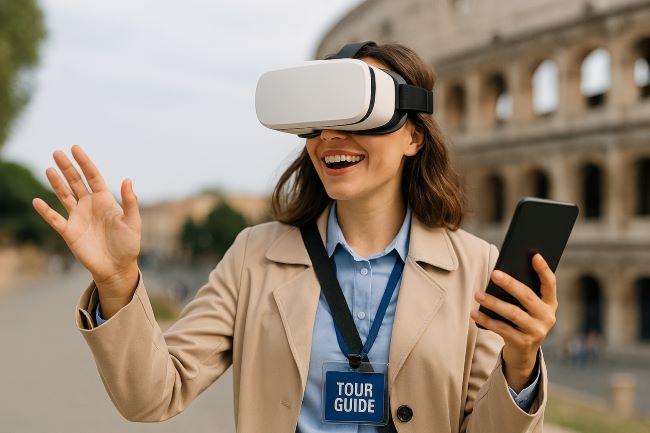
The programme combines solid knowledge in tourism, hospitality, events and leisure with advanced digital technology skills. Graduates are equipped to use advanced digital tools — such as big data, artificial intelligence, and virtual and augmented reality — and apply them effectively within the tourism sector, an area of continuous evolution.

With a strong focus on innovation, sustainability and close links to industry, this bachelor’s degree prepares graduates to design and deliver intelligent, efficient and sustainable tourism experiences, capable of responding to both current and future challenges of the sector.

Programme Coordinator

Célia Maria Salmim Rafael
celia.rafael@ipleiria.pt

School

City

Language

Portuguese

Type

Morning & Afternoon

Length

6 semesters

Vacancies

General Contingent: 20
International Contingent: 1

DGES certification

Objectives

Programme

Digital Competences
Use technological tools applied to tourism, including big data, artificial intelligence, and virtual and augmented reality.

Promoting Innovation
Master digital technologies to enhance the quality and appeal of tourism services.

Data Management and Analysis
Collect, interpret, and apply data to make informed decisions, optimise operations, and develop marketing strategies.

Digital Transformation
Lead the digitalisation of the tourism sector and integrate technologies across all areas, from management to customer experience.

Sustainability and Efficiency
Apply sustainable practices through technology, promoting operational efficiency and reducing environmental impact.

Cybersecurity, Digital Ethics and Data Protection
Implement best practices in cybersecurity, transparency, and personal data protection, essential competences in tourism, hospitality, and leisure.

Careers Options

Programme
  • Digital transformation and innovation in tourism
    (public administration, local authorities, regional tourism organisations)
  • Digital technologies applied to tourism
    (tourism companies, hospitality, tour operators, event management companies)
  • Data management and decision support in tourism
    (tourism organisations, startups and technology companies)
  • Digital marketing and tourism intelligence
    (tourism businesses, destinations, destination management organisations)
  • Customer experience and immersive digital content
    (tourism promotion, smart destinations, creative and technology companies)
  • Technology-driven sustainability and operational efficiency
    (sustainable tourism projects, public and private organisations)
  • Smart tourism destination management
    (destination management organisations, smart tourism projects)
  • Consultancy and entrepreneurship in digital tourism
    (technology consultancy, development of digital tourism solutions)
1st Year
ID Name Semester ECTS Length
Semester-long 6 49 h
  1. Theory of leisure
    1.1 Historical overview and cultural context
    1.2 Definitions of leisure
    1.3 Leisure, recreation, tourism
    1.4 Leisure in society and in the life cycle
  1. Recreation/tourism recreation
    2.1 Definitions of Tourism Recreation
    2.2 Characteristics and purposes
    2.3 Driving factors and modalities
    2.4 Definitions, typologies and characteristics of tourist entertainment
  2. The Tourism Recreation Promoter
    3.1 Characteristics and facets of the Tourism Recreation Promoter
    3.2 Activities
    3.3 Tourism Recreation Promoter in hotels
  3. Tourism Recreation Management
    4.1 Tourism Recreation Manager
    4.2 Tourism Recreation projects
    4.3 Audiences in Tourism Recreation
    4.4. Tourism Recreation Department
    5.Dynamics and games
    5.1 Importance
    5.2 Usefulness
    5.3 Main objectives
    6.Projects and marketing in Tourism Recreation.
    6.1 Market research and direct marketing in Tourism Recreation.
    6.2 Planning
Semester-long 6 64 h
  1. Tourism: definitions and concepts
    2.The Tourist Demand and the Tourist Offer
    3.Measures and indicators of tourism activity
    4.The distribution system in tourism
    5.Tourism institutional organization
    6.Structural and historical aspects in the formation of the tourism phenomenon – evolution and trends for the future
Semester-long 6 64 h
  1. Fundamentals of Data Analysis
  2. Descriptive Statistics
  3. Inferential Statistics
  4. Bivariate analysis
Semester-long 6 64 h
  1. Fundamentals of Geographic Information
  2. Sources of geographic data and main acquisition methods
  3. Digital Cartography and Spatial Representation
  4. Spatial Modeling and Geographic Analysis
  5. Creation of Dashboards and Web Applications for Spatializing Tourism Phenomena
Semester-long 6 64 h
  1. Introduction to the Study of Event Organization
    1.1 Introduction to the subject
    1.2 Evolution of the concept
    1.3 Definition of an event
  2. Classification and types of events
    2.1 Classification and characterization of events
    2.2 Types of events
  3. The event management team and the Event Management activity
    3.1. The profile and skills of the event manager
    3.2 Technical team
    3.3 Communication between the team
  4. Planning and organizing an event
    4.1 Pre-event
    4.2 Event
    4.3 Post-event
    4.4 Evaluation
  5. Economic, Social and Cultural Impact of the Event
    5.1 Economic impacts
    5.2 Social impacts
    5.3 Cultural impacts
  6. New trends in events
    6.1 Growth of the events market
    6.2 New concepts
Semester-long 6 64 h
  1. Introduction to Digital Technologies in Tourism
  2. Digital Tools and Platforms for Tourism
  3. Introduction to disruptive technologies
  4. Introduction to consolidated technologies
  5. Innovation and Future Trends
Semester-long 6 64 h
  1. Photographic techniques
  2. Image editing
  3. 360 and 3D imaging
  4. Aerial image
Semester-long 6 64 h
  1. Principals of Tourist Itineraries: Concepts and Types
  2. Supply and Demand of Tourist Itineraries: Emerging Paradigms
  3. Designing Tourist Itineraries: Tools and Methodologies
  4. Digital Technologies Applied to Tourist Itineraries: Platforms, Applications, E-tineraries
Semester-long 6 64 h
  1. English for Technologies in Tourism
  2. Digital Communication in Tourism in English
  3. English for Technological Trends in Tourism
Semester-long 6 64 h
  1. English for Professional and Strategic Communication in Digital Tourism
  2. English for Immersive Experiences and Emerging Technologies
  3. Crisis Management and Multilingual Service in Digital Tourism
2nd Year
ID Name Semester ECTS Length
Semester-long 6 64 h
  1. Introduction to Big Data and Tourism
    Definition and characteristics of Big Data (The 7 Vs).
    Importance of Big Data in the tourism sector.
  2. Technological Foundations
    Big Data architectures: Hadoop, Spark, and other distributed systems.
    Relational and non-relational databases (SQL vs NoSQL).
    Cloud storage platforms.
  3. Data Sources in Tourism
    Data generated by reservations (GDS, OTAs).
    Social media data (sentiment analysis, trends).
    Mobility and transportation data (GPS, apps).
  4. Data Analysis Techniques
    Data cleaning and preprocessing.
    Descriptive and predictive analysis.
    Data visualization.
    Use of Machine Learning for tourism demand forecasting.
  5. Big Data for Decision-Making
    Personalization of the customer experience.
    Market trend and behavior analysis.
    Sustainable destination management using Big Data.
    Case studies.
  6. Practical Project
    Development of an applied Big Data project
Semester-long 6 49 h
  1. Hospitality Service
    1.1 Concept of hotel service
    1.2 Service characteristics
  2. History of the hospitality industry
    2.1. The historical evolution of hospitality
    2.2.Evolution of Hospitality Industry in Portugal
  3. Lodging establishments
    3.1. Classification and characteristics of lodging establishments
    3.2. Local Lodging
  4. Lodging industry
    4.1 Management Models
    4.2 Strategic operations
  5. Organization and functionality of hotel industry
    5.1. Structural organization
    5.2. Organizational functions
  6. New general principles of Hotel management
Semester-long 6 49 h
  1. Restaurant and catering establishments
    1.1 Definition and concepts
    1.2 Different types of catering establishments
    1.3 Different types of catering
  2. The restaurant and catering market
    2.1 Commercial and social catering
    2.2 Traditional and alternative catering
  3. Setting up a restaurant and/or catering unit
    3.1 General conditions for carrying out the service
    3.2 Infrastructure
    3.3 Layout and characterization of equipment
    3.4 Definition, types and planning of maintenance
  4. Kitchen service
    4.1 The kitchen brigade
    4.2 Kitchen bases
Semester-long 6 64 h
  1. Introduction to Digital Marketing and Communication and Emerging Trends
  2. Digital Communication Strategies
  3. Digital Platforms and Tools (SEO, Social Media, Online Advertising, and Email Marketing)
  4. Campaign Planning
  5. Analysis of Results, Metrics, and KPIs
Semester-long 6 64 h
  1. Digital Law
    1.1. Notion of Law
    1.2. Rights in the digital age
  2. Legal Protection of Personal Data
    2.1 Fundamental Principles and basic concepts
    2.2. Types of Personal Data
    2.3 Lawfulness in the processing of Personal Data
    2.3 Rights of the Personal Data Holder
    2.4 Control Authority
    2.5 Administrative offense sanctioning regime
  3. E-commerce
    3.1 Electronic Contracting
    3.2 Consumers and contracts concluded remotely
    3.3 Digital platforms
  4. Intellectual Property
    4.1. Copyright in the Information Society
    4.1.1. Basic concept: Copyright and Related Rights
    4.1.2 Copyright Content
    4.1.3 Type of works
    4.1.4 Protection of Copyright
    4.1.5 Challenges to the protection of Copyright in the information society
    4.2. Industrial Property: legal protection of brands
  5. Digital Law in Tourism
    5.1 Dematerialization of licensing processes
    5.2 Dematerialized legal obligations
Semester-long 6 64 h
  1. Introduction to Information Systems in Tourism
    Understanding the importance of information systems in the management and operation of tourism businesses.
  2. Collaborative Tools
    Understanding the role of collaborative tools in team communication and productivity in the tourism sector.
    Identifying and using collaborative platforms for project management and information sharing.
    Applying best practices in the use of these tools to optimize work processes.
  3. Remote Work and Team Management Tools
    Exploring the challenges and opportunities of remote work in the tourism sector.
    Using digital tools for the coordination and efficient management of hybrid teams.
    Developing skills in the use of communication and organization platforms for remote work.
  4. Content Management Systems
    Exploring content management systems (CMS) for the creation and administration of websites
Semester-long 6 64 h
  1. Mobile Technologies in Tourism
  2. Emerging Technologies
    Key Mobile Technologies
  3. Opportunities of Mobile Technologies in Tourism
  4. Mobile Applications in Tourism
  5. Development and Implementation of Mobile Application Prototypes
    Learning the Fundamentals of Mobile Application Development
    Interface Design
    User Experience
    Prototyping
    Low-Code Technologies
Semester-long 6 64 h
  1. Fundamentals of Audiovisual Production
    Evolution of Audiovisual Media
    Differences between Video and Audio Production
  2. Fundamentals of Video Editing
    Editing Tools
    Montage and Storyboarding
  3. Fundamentals of Audio Editing
    Introduction to Digital Audio
    Audio Editing Techniques
  4. Concepts of Audiovisual Narrative
    Importance of Video and Audio Editing in Storytelling
    Editing Techniques Focused on Audiovisual Narrative
  5. Export Formats
    Video and Audio Formats
Semester-long 6 64 h
  1. Introduction to Artificial Intelligence:
    Introductory concepts of AI.
    AI applications in different sectors.
    Ethics and challenges of AI in tourism.
  2. Key Technologies:
    Machine Learning.
    Natural Language Processing.
    Computer Vision.
    Generative AI.
  3. AI Applications in Tourism:
    Personalizing the Customer Experience:
    Recommendation systems.
    Chatbots and virtual assistants.
    Optimizing Operations:
    Dynamic pricing management.
    Route and logistics optimization.
    Predictive Analysis:
    Demand forecasting.
    Fraud detection.
  4. Challenges and Opportunities:
    Data privacy and security.
    AI’s impact on employment.
    Sustainability and tourism.
Semester-long 6 64 h
  1. Fundamental Concepts
    Secure functioning of the Internet
    Fundamental concepts of information security
    Types and attack vectors
    Types of vulnerabilities and exploitation techniques
  2. Security Mechanisms and Services
    Fundamentals of Cryptography
    CIA Model (Confidentiality, Integrity, Availability)
    Authentication, authorization, and access control
    Functioning of IDS (Intrusion Detection Systems), VPNs, and Firewalls
  3. Risk Management
    Practical notions of risk analysis
    Incident management
    Business continuity planning
  4. Legislation and Standards
    GDPR, NIS2
    International information security standards
    Main entities governing cyberspace
  5. Cloud Security
    Cloud service models (IaaS, PaaS, SaaS)
    Cloud security topics
  6. Network Security
    Fundamental concepts of network security
    Wireless network security
    Mobile device security
  7. Cyber Awareness
    Best practices for individual and corporate protection
    Social engineering attacks
  8. Artificial Intelligence and Cybersecurity
3rd Year
ID Name Semester ECTS Length
Semester-long 4 47 h
  1. Basic Management Concepts
    1.1 Introduction to Management
    1.2 Typical Business Models in the Tourism Sector
    1.3 Planning and Strategy
    1.4 Organization and Organizational Structure
    1.5 Basic Financial Management
  2. Entrepreneurship
    2.1 Concept and Evolution
    2.2 Types of Entrepreneurship
    2.3 Entrepreneur Profile
    2.4 Characterization of the Entrepreneurial Spirit in Tourism
  3. Innovation
    3.1 Concept
    3.2 Types and Classifications of Innovation
    3.3 Innovation vs. Differentiation
  4. The Entrepreneurial Process – Business Ideas and Opportunity Identification
  5. Business Opportunity Analysis and Evaluation
  6. Building the CANVAS Business Model Applied to Tourism
    6.1 Design
    6.2 Strategy
    6.3 Process
  7. Presentation, Discussion, and Validation of Business Concepts
Semester-long 6 64 h
  1. Concepts and Evolution
  2. Research and Case Study Analysis
  3. Interactivity and Usability (UX/UI) in Experience Design
  4. No-Code/Low-Code Tools and AI Resources for Simulating Virtual Environments
  5. Design and Prototyping of Virtual Experiences
Semester-long 6 64 h
  1. Definition of narrative and Storytelling
  2. Storytelling Elements and Techniques
  3. Definition of Visual Cultural
  4. Visual Culture and its importance in promoting tourist destinations.
  5. Application of narratives and Storytelling in the digital world in tourism contexts.
  6. Innovation and creativity processes using Infographics and Design Thinking.
Semester-long 6 64 h
  1. The Sustainable Development Goals (SDGs) and the sustainable tourism indicators of the Global Sustainable Tourism Council (GSTC).
  2. The use of Big Data systems in the analysis of socio-economic and environmental tourism data.
  3. Analysis of tourist flows based on digital tracking systems: GPS devices, GPS in applications, mobile networks, social networks, WiFi,
    and tourism market operations (electronic payments).
  4. Calculation of carbon and water footprints in various tourism activities.
  5. The use of digital tools to monitor best practices in tourism activities.
Semester-long 4 47 h
  1. Introduction to the Digital Economy
  2. Business models in the Digital Era
  3. Creating Digital Businesses in Tourism
  4. Collaborative Economy and Tourism
  5. Digital Business Financing.
Semester-long 3 34 h

The course unit is based on the accumulation of learning experiences throughout the year, offering flexibility for students to choose activities that align with their interests and professional goals.

Activities to be considered:

  1. Open Lectures and Conferences
  2. Workshops and Practical Sessions
  3. Elective Micro-credentials and Short Courses
  4. Participation in Congresses or Scientific Events
  5. Seminars organized by the master’s program and other entities
  6. Research Projects
  7. Volunteer Programs or Relevant Extracurricular Projects
  8. Other activities
Semester-long 4 47 h
  1. Introductory Concepts
    Main business processes in Tourism
    Process Digitalization: Concepts of digitization, digitalization, and digital transformation
    The importance of Technological Leaps
    What is Digital Transformation?
    How to implement a culture of Digital Transformation
    Seeking competitive advantages
  2. Smart Cities
    Definition of Smart Cities
    Dimensions of Smart Cities
    Characteristics of Smart Cities
    Case Studies
  3. Tourism 4.0/5.0
    Introductory concepts
    Digital Online Tourist Identity (DOTI)
    Collaboration Impact Token (CIT)
    Case Studies
  4. Smart Tourism
  5. Blockchain in Tourism
  6. Virtual and Augmented Reality in Tourism
Semester-long 6 64 h
  1. Fundamentals of the Smart Tourist Destinations model
  2. Planning and development of smart tourist destinations
  3. Sustainability in smart tourist destinations
  4. Strategic Management and Competitiveness of Smart Tourist Destinations
  5. Application of territorial brands in Smart Tourist Destinations
  6. Marketing and Branding applied to Smart Tourist Destinations
  7. Image and promotion of smart tourist destinations
  8. Intelligence and digital transformation for tourism and culture organizations and institutions
  9. Computer solutions, new technologies and Computer Systems of Tourist Intelligence for smart tourist destinations
  10. Standards, references and technical specifications for the implementation of intelligent security systems management of tourist destinations
  11. Entrepreneurship and Innovation in Smart Tourist Destinations
  12. Research and knowledge on Smart Tourist Destinations
Semester-long 6 64 h
  1. The market and consumption – basic concepts
  2. The consumer as a rational agent and the psychological structures of behavior
  3. Market segmentation in tourism
  4. Explanatory variables: sociological and cultural factors
  5. The decision-making process in purchases
  6. Operationalization of tools for analyzing consumer behavior in a digital context
Semester-long 15

Internship

Project

Part 1:

  1. Preparation of the Written Work:
    1.1. Theoretical Framework
    1.2. Definition of Methodology
    1.3. Types of Sources and Data Collection
    1.4. Report Formatting and Content
    Part 2:
  2. Execution of the Work and Writing of the Final Report
  3. Preparation for an Oral Presentation

Free Option

The optional elective curricular units must be selected from among the curricular units offered across all ESTM degree programmes and made available for this purpose, under the guidance of the higher education institution.


Entry Requirements

For further information about international students’ applications,
please see International Applicants or contact the International Students’ Office by email: studywithus@ipleiria.pt

Accreditation

State: Accreditated
Nº years of Accredidation: 3
Date of Publication: 12/12/2025
A3ES Accreditation

More Information

Scientific area of study: CNAEF 812 Tourism and Leisure

Online Application

Use the button bellow to start your application.

Application Fee

60€

Enrolment Fee

General Contingent: 30€
International Contingent: 100€

Tuition Fee

General Contingent: 697 €
International Contingent: 3000€