
Pedagogical use of ICT
Pedagogical use of ICT
Programme Introduction
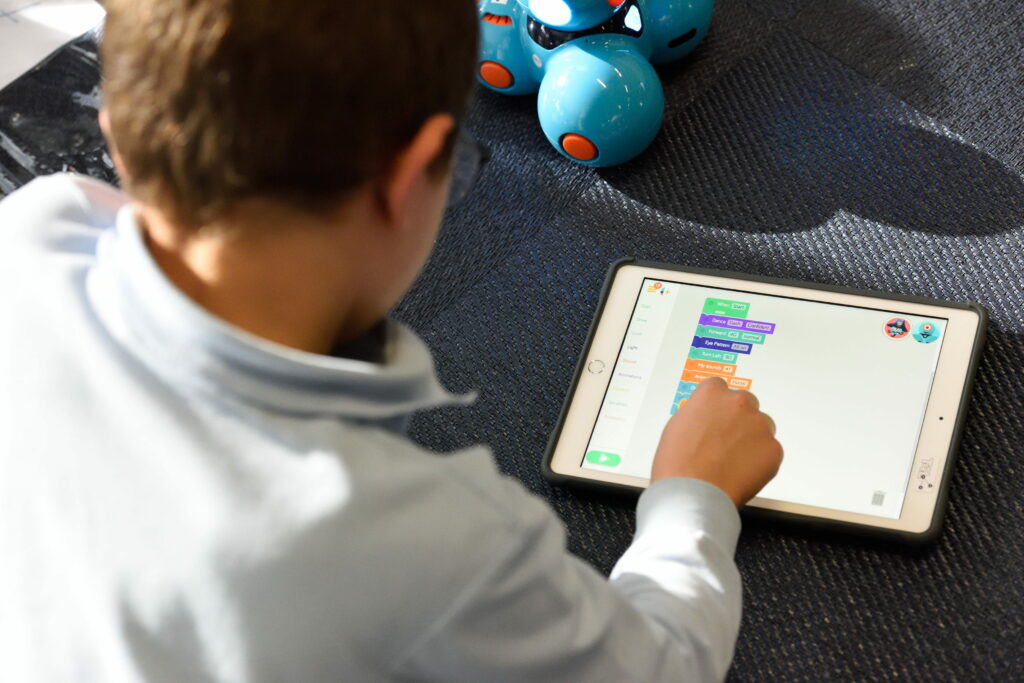
There has been remarkable evolution in terms of the possibilities of being able to use ICTs (Information and Comunication Technologies) in formal and nonformal educational contexts. ICTs currently represent a field that is characterised by a growing diversity of the means of use that facilitate innovative learning situations and the development of skills in different areas. The processes of integrating ICTs into curricula presupposes a change in conventional practices, which consequently means that teachers need to have an in-depth knowledge and a critical perspective of the possibilities, limits and implications of the pedagogical use of these technologies. This need to train teachers
has been recognised by Ordinance No. 731/2009, which created the Training and Certification System for ICT Skills for teachers. This Master’s programme aims to promote the expansion and development of skills amongst teachers so as to be able to use ICTs as a pedagogical resource from a perspective of educational research and innovation.
Programme Coordinator
Filipe Alexandre Silva Santos
filipe.santos@ipleiria.pt
Reference
School
City
Language
Type
Length
Vacancies
General and International Student Contingent: 30
Notice
Edital 2026 (PT Doc retf)
DGES certification
Objectives
This programme aims to promote the following skills
- To know how to use and apply a large variety of web technologies and classroom technologies in professional contexts, by means of experience;
- To understand the main pedagogical theories and models associated with the pedagogical use of ICTs and to become acquainted with the real implications that the use of ICTs could have on learning by students;
- To know how to analyse and select the technological resources that are most suitable for each pedagogical situation;
- To know how to manage experiences and reflections from the perspective of research and with a view to sharing and collaborating with the educational community;
- To know how to analyse and evaluate studies and research methodologies linked to the use of educational technologies and to apply this knowledge in concrete research projects;
- To be able to engage in life long learning in an autonomous and reflective manner

| ID | Name | Semester | ECTS | Length |
|---|---|---|---|---|
| 2108101 | Education in a knowledge-based society | 1st Semester | 7.5 | 1st Year |
|
||||
| 2108102 | Educational technology I | 1st Semester | 7.5 | 1st Year |
|
1. Web 2.0 Colaborative tools: |
||||
| 2108103 | Learning based on interactive and multimedia materials | 1st Semester | 7.5 | 1st Year |
|
Learning theories in the classroom in technological context: |
||||
| 2108104 | Learning based on collaborative activities | 1st Semester | 7.5 | 1st Year |
|
1. Communication and collaboration in virtual learning contexts: |
||||
| 2108105 | Designing, implementing and evaluating projects using ICTs | 2nd Semester | 7.5 | 1st Year |
|
1 – Projets in contemporary society: |
||||
| 2108106 | Educational technologies II | 2nd Semester | 7.5 | 1st Year |
|
1. Concept and historical evolution of Distance Education (DE) |
||||
| 2108107 | Use of multimedia materials in educational contexts | 2nd Semester | 7.5 | 1st Year |
|
1. Planning the use of multimedia resources in educational contexts: |
||||
| 2108108 | Research methodologies | 2nd Semester | 7.5 | 1st Year |
|
1. Research Methods: |
| ID | Name | Semester | ECTS | Length |
|---|---|---|---|---|
| 2108109 | Seminar | 1st Semester | 15 | 2nd Year |
|
1. Emerging technologies in education |
||||
| 2108110 | Project | 1st Semester | 45 | 2nd Year |
|
– Identifying the issue for intervention |
Entry Requirements
Accreditation
State: Accredited
Number of years of accreditation: 6
Publication Date: 02-05-2023
Accreditation A3ES
State: Accredited
Number of years of accreditation: 6
Publication Date: 02-05-2023
Accreditation A3ES
More Information
Contacts
E-mail: studywithus@ipleiria.pt
Contacts
E-mail: studywithus@ipleiria.pt
Application Fee
60€
Enrolment Fee
General Contingent: 50€
International Student Contingent: 100€
General Contingent: 50€
International Student Contingent: 100€
Tuition Fee
General Contingent: 1140€
International Student Contingent: 3000€
General Contingent: 1140€
International Student Contingent: 3000€
Online Application
Use the button bellow to start your application.