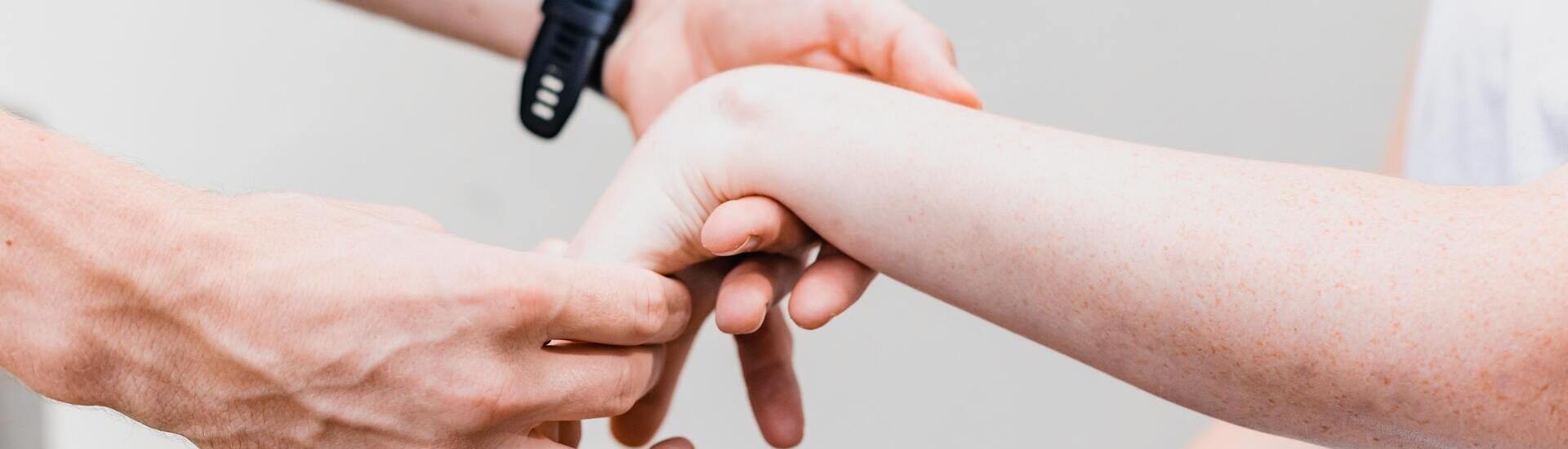
Hand Therapy
Hand Therapy
Programme Introduction
The Master’s Programme in Hand Therapy is offered in association with the University of Burgos and provides a high level of technical and scientific training, enhanced by the association of the two institutions.
Students are expected to be able to use advanced and appropriate theoretical-practical tools to perform and provide excellent care to persons with functional impairment of the upper limb. The educational process will be based on the acquisition of competences in order to increase the domain of in-depth knowledge in the area of Hand Therapy in its multiple aspects, scientific and methodological, promoting multidisciplinary reflexive skills. The planning, management and organization capacities of upper limb rehabilitation services and / or programs in the different contexts and fields of intervention will be ensured in order to provide them with leadership skills. The development of critical thinking, both impractice and research, is fostered for proper integration into multidisciplinary teams, research projects or even research centres. This whole process will lead our master’s students in to a path of personal and professional growth.
Programme Coordinator
Elisabete Jorge da Costa Roldão
coord.mtm.ess@ipleiria.pt
School
City
Language
Type
Length
Vacancies
General and International student contingent: 15
Notice
Edital 2026 (PT Doc-Ret)
DGES certification
Objectives
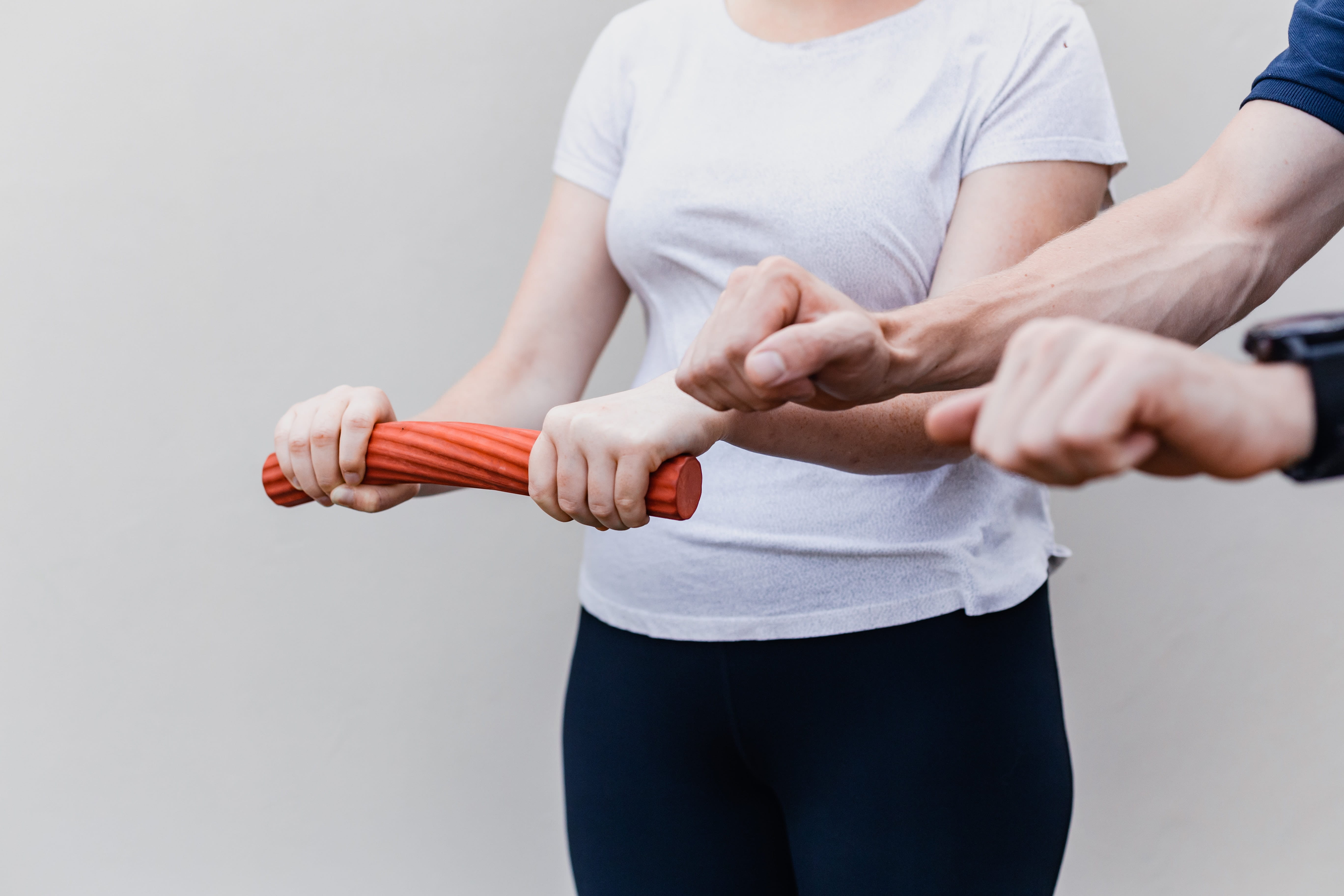
The Master’s degree in Hand Therapy forms reeducators of the upper limb and hand, a designation adopted by the Portuguese Association of Hand Therapy considering the international guidelines. These may be occupational therapists and/or physiotherapists who specialize in the rehabilitation of people with conditions affecting the upper limb.
To the reeducator of the upper limb and hand, it is required to perform post-graduation training and to have clinical experience. The intervention with musculoskeletal, neurological, surgical or other conditions, which cause alteration or even loss offunction of the upper limb, are complex requiring a specific knowledge at this level and in several domains.
| ID | Name | Semester | ECTS | Length |
|---|---|---|---|---|
| Assessment and Diagnosis | 1S | 6 | 55 h | |
|
CP1. Anamnesis and clinical history |
||||
| Clinical Conditions of the Upper Limb | 1S | 9 | 85 h | |
|
CP1. Central and peripheral neurological pathologies |
||||
| Clinical Reasoning and Critical Thinking | 1S | 3 | 30 h | |
|
CP1. Clinical reasoning |
||||
| Skin Conditions, Motor Control and Pain | 1S | 9 | 85 h | |
|
CP1. Cutaneous pathology in hand therapy conditions |
||||
| Biomaterials | 1S | 3 | 20 h | |
|
CP1 Introduction to biomaterials (concept, classes, historical, ethical and regulatory aspects) |
||||
| Hand Therapy in Musculoskeletal Conditions | 2S | 7 | 70 h | |
|
CP1. Tendon apparatus of the upper limb: flexor and extensor |
||||
| Hand Therapy in Neurological Conditions | 2S | 7 | 70 h | |
|
CP1. Anatomic and physiological revision of the central nervous system |
||||
| Hand Therapy in Specific Conditions | 2S | 7 | 70 h | |
|
CP1. The osteoarticular, tendinous and neurological lesions of the wrist and fingers: definition, methods, techniques |
||||
| Assistive Technologies and Digital Fabrication | 2S | 5 | 50 h | |
|
CP1.1. ISO 9999 classification: different Ap classes |
||||
| Research Methods | 2S | 4 | 40 h | |
|
CP1. Quantitative research projects |
No curricular units were found for this section.
Entry Requirements
May apply for the master’s degree:
- Holders of the degree of licensee or legal equivalent in physiotherapy oroccupational therapy, conferred by a national higher education institution;
- Holders of a foreign higher academic degree,or legal equivalent, in physiotherapy or occupational therapy conferred following a 1st cycle of studies organised inaccordance with the principles of the Bologna process by a state adhering to this Process;
- The holders of a foreignhigher academic degree, which is recognized by the Technical-Scientific Council (CTC) of the Sciences Health School ofthe Polytechnic of Leiria (ESS-PL) as satisfying the objectives of the degree of licensee in physiotherapy or occupationaltherapy or in related areas;
- The holders of a school, scientific or professional curriculum, which is recognized by theESS-PL CTC as attesting the ability to perform this cycle of studies.
May apply for the master’s degree:
- Holders of the degree of licensee or legal equivalent in physiotherapy oroccupational therapy, conferred by a national higher education institution;
- Holders of a foreign higher academic degree,or legal equivalent, in physiotherapy or occupational therapy conferred following a 1st cycle of studies organised inaccordance with the principles of the Bologna process by a state adhering to this Process;
- The holders of a foreignhigher academic degree, which is recognized by the Technical-Scientific Council (CTC) of the Sciences Health School ofthe Polytechnic of Leiria (ESS-PL) as satisfying the objectives of the degree of licensee in physiotherapy or occupationaltherapy or in related areas;
- The holders of a school, scientific or professional curriculum, which is recognized by theESS-PL CTC as attesting the ability to perform this cycle of studies.
Accreditation
State: Accredited
Nº years of Accreditation: 3
Dateof Publication: 06/10/2021
A3ES Accreditation
State: Accredited
Nº years of Accreditation: 3
Dateof Publication: 06/10/2021
A3ES Accreditation
More Information
E-mail: studywithus@ipleiria.pt
E-mail: studywithus@ipleiria.pt
Online Application
Use the button bellow to start your application.
Application Fee
60€
60€
Enrolment Fee
General contingent: 50€
International student contingent: 100€
General contingent: 50€
International student contingent: 100€
Tuition Fee
General contingent: 2000€
International student contingent: 3000€
General contingent: 2000€
International student contingent: 3000€
