Civil Engineering

Civil Engineering

Course Type:
Bachelor’s Programme

Programme Introduction

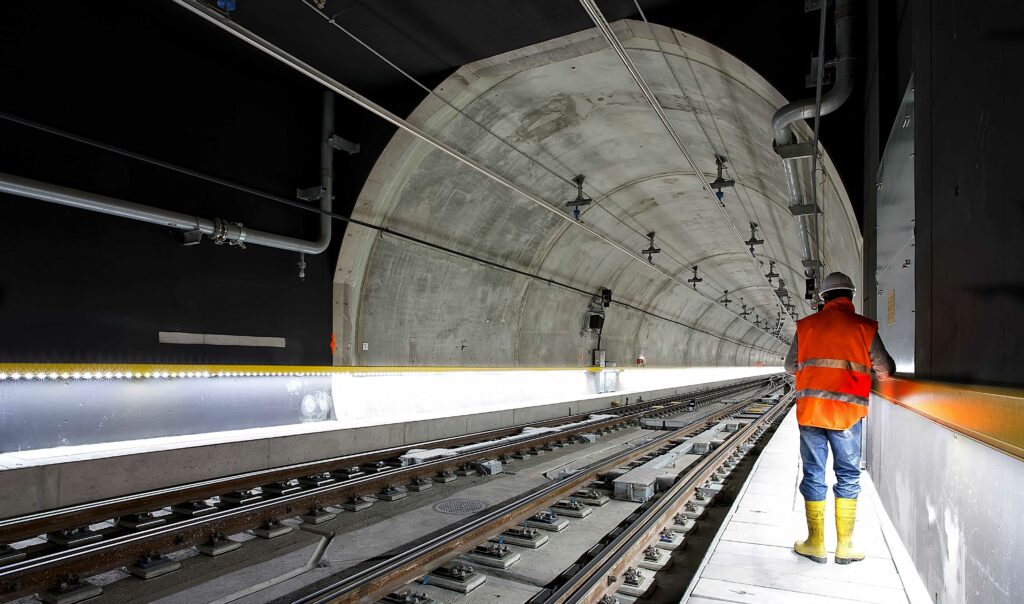
The aim of the undergraduate course is to train professionals with highly qualified scientific, technical, ethical and professional levels, in the various areas of civil engineering intervention, with the ability to apply high level knowledge. To reach this goal, skills are developed to enable these professionals to design, plan, implement and manage projects in the areas of structures, buildings, water and environment, planning and transport. In addition the following capacities are also developed: use of modern information technology in implementing the various functions that make up the civil engineering professional activities; act in diverse workplaces such as consulting, design, construction companies and construction services, building inspection, planning and transport, management water resources and environment, both government entities and private companies.

The Polytechnic of Leiria is the first Institute in Portugal to be granted the EUR-ACE® label at the bachelor level in Civil Engineering recognized by ENAEE (European Network for Accreditation of Engineering Education). The accreditation extended to Master in Civil Engineering as well recognizing quality in Civil Engineering programs at School of Technology and Management of Leiria’s Polytechnic. The distinction confirms education quality in these particular field of study placing these programs among the best European universities and polytechnics.

Programme Coordinator

Miguel Filipe Barreto dos Santos
coord.ec.estg@ipleiria.pt

Reference

9089

School

City

Language

Portuguese

Type

Morning & Afternoon

Length

6 Semesters

Vacancies

General contingent: 15
International student contingent: 15

DGES certification

1st Year
ID Name Semester ECTS Length
1st Semester 5 65 h
  1. Vectors in R^3
    1. Dot product
    2. Cross product
    3. Scalar triple product
  2. Matrices and Systems of Linear Equations
    1. Matrix definitions and examples
    2. Matrix operations
    3. Transpose and inverse of a matrix
    4. Gauss elimination
    5. Rank of a matrix
    6. Systems of linear equations
  3. Determinants
    1. Definition
    2. Techniques for evaluating 2×2 and 3×3 determinants
    3. Properties
    4. Laplace’s theorem (cofactor expansion)
    5. Adjoint of a matrix and inverse matrix
    6. Cramer’s rule
    7. Inverse matrix method
  4. Vector Spaces
    1. Definition and examples
    2. Properties
    3. Subspaces
    4. Linear combination
    5. Span of a set of vectors
    6. Linear independence
    7. Basis and dimension
  5. Linear Transformations
    1. Definition and examples
    2. Matrix of a linear transformation
    3. Kernel and range of a linear transformation
    4. Linear transformations in the plane
    5. Eigenvalues and eigenvectors
1st Semester 6 80 h
  1. Differential calculus in IR
    1. Derivative, derivative rules, composed and inverse functions derivatives
    2. Derivatives of inverse trigonometric functions
    3. Cauchy’s rule
    4. Higher order derivatives and Taylor’s Polynomial
    5. Parametric curves in the plane and its derivatives
  2. Integration in IR
    1. Indefinite integration (immediate, by parts, by substitution, and rational fractions)
    2. Definite integral and its properties
    3. Fundamental Theorem of integral calculus
    4. Areas and solids of revolution’s volumes
    5. Curves’ length
  3. Real functions of several real variables
    1. Definition, domain, contours and graph
    2. Limits and continuity
    3. Partial derivatives, gradient vector, directional derivatives and chain rule
    4. Extrema points
  4. Double integrals
    1. Definition and properties
    2. Fubini’s theorem
    3. Change of integration’s order
    4. Double integrals in polar coordinates
    5. Applications
1st Semester 6 81 h
  1. Geodesy: Geoide, Natural and Geodesic Coordinates, Ellipsoids Reference, Geodesic Data, Geographic and Geodesic Coordinates, Geodesic Networks;
  2. Cartography: Cartographic Projections Systems, Cartographic Azimuth; Scale Concept, Cartographic Representation of Land Surface.
  3. Collect and process data acquired: Working with Topographical Equipment, using GPS Receivers and Laserscanning for Acquisition of Information. Perform a small topographic survey with classic methods and collect and process data acquired with GPS receivers and Laserscanning.
  4. Other systems to collect and process acquired data: Photogrammetry, Remote Sensing.
  5. Model surface, Digital Terrain Models using BIM; Reading and interpretation of topographical maps; Visibility Maps; Profiling; calculation of land volumes.
1st Semester 5 65 h
  1. Introduction and Standardization
    1. Introduction to technical drawing
    2. Standardization
    3. Scales
    4. Dimensioning
  2. Orthogonal Projections
    1. Representation of volumes by their orthogonal projections using European and American methods
    2. Enclosing cube
    3. Freehand sketch and tape survey of constructed elements.
  3. Perspectives
    1. Types of plane geometric projections
    2. Orthogonal Axonometric Projections
    3. Methodology for reading orthogonal projections
  4. Introduction to the CAD system: 2D drawing – 2D graphic entities, editing commands, dimensioning and printing commands).
    1. Definition of designed parts in the field of civil engineering (representation of plans, sections, elevations, construction details, covering various civil engineering specialties
    2. Metal construction drawing
  5. Implementation of topographic survey (CAD)
1st Semester 6 80 h
  1. Statics and Dynamics
    1. Basic principles
    2. Forces and static equilibrium
    3. Forces and motion
    4. Linear momentum and collisions
    5. Work and energy
    6. Rotation of a rigid body
  2. Periodic movements
    1. Periodic Motion
    2. mechanical waves
    3. interference effects and stationary waves
  3. Sound
    1. Propagation Speed
    2. Proprieties
  4. Matter
    1. Solids
    2. Fluids
1st Semester 2 34 h
  1. English as a lingua franca. Attitudes towards English.Expressions to convey linguistic and learning necessities.Brief notions of the characteristics that have led English to become a global language.
  2. Informal Conversation: Taking part in conversations about people, places and other topics; description of personal and professional
    profiles; identification of cultural differences.
  3. Contacts: Starting and keeping conversations about topics related to the professional context via telephone, email or face to face… Describing people and exchanging information.
  4. Meetings: Expressions to set up and organize meetings, make decisions, solve problems, present suggestions and lead meetings. Official register of information. Checking and clarifying facts and figures.
  5. Negotiating relationships: Expression of formality and informality. Expression of likes and dislikes about travelling on business. Discussing attitudes about meetings and cultural behaviours in different countries.
2nd Semester 5 65 h
  1. Review of mechanics of rigid bodies
    1. Forces (algebra of vectors)
  2. Types of structures
  3. Actions
    1. Classification
    2. Eccentric loads and conjugates
    3. Resultant of distributed loads
  4. Connections and releases from a structure
    1. Connections
      1. Degrees of freedom
      2. Classification of connections
      3. Reactions that arise in each type of the connection
    2. Releases
  5. Degree of static indeterminacy of structures
  6. Determination of reactions
    1. Free body diagram
    2. Calculation of reactions in structures without and with releases
  7. Internal forces on trusses
    1. Equilibrium nodes Method
    2. Section (Ritter) Method
  8. Internal forces in bar structures
    1. Forces on arbitrary and generic section
    2. Diagrams of internal forces
    3. Differential relations between loads and internal forces
    4. Efforts in closed structures with releases
2nd Semester 3 50 h
  1. Probability distributions
    1. Random variable definition
    2. Discrete random variables
    3. Continuous random variables
    4. Discrete probability distributions (Bernoulli trials, binomial and Poisson)
    5. Continuous probability distributions (uniform, exponential, normal, chi-square, Student-t and F)
  2. Summary data analysis
    1. Preparation of a data set
    2. Frequencies distribution tables
    3. Numerical summaries (central and not central tendency, dispersion and skewness)
    4. Graphical representation
  3. Statistical Inference
    1. Point estimation and sampling distributions
    2. Confidence intervals
    3. Hypothesis testing
  4. Bivariate analysis
    1. Contingency tables
    2. Linear Regression
2nd Semester 5 65 h
  1. Geology – objects and methods. Introduction to Engineering Geology
  2. The Earth, internal geodynamics: origin, structure and constitution. Earthquakes: origin, seismic waves, earthquake scales, distribution of seismic focus, seismic risk in Portugal, effects of earthquakes on buildings. General requirements anti-seismic construction. Isostasy, continental drift and its mechanisms, plate tectonics, Earth’s age and geological history.
  3. Geodynamics surface processes.
  4. Elements of Mineralogy and Petrology. Classification of rocks occurring in Portugal. Classification with minerals and rocks.
  5. Geological maps. Geotechnical maps and geotechnical zoning maps. Reading and interpretation of topographical maps and geological maps. Execution of topography and geological profiles.
  6. Principles of Rock Mechanics.
  7. Geotechnical prospecting.
  8. Hydrogeology and water prospecting.
2nd Semester 6 80 h
  1. Theory of Errors: error definitions.
  2. Nonlinear Equations: localization, bisection method, Newton-Raphson method for equations.
  3. Function Approximation: Taylor polynomials.
  4. Polynomial Interpolation: Vandermonde system, divided diferences, Newton interpolation, inverse interpolation.
  5. Least Squares Method: linear models, linearization tecnhiques.
  6. Numerical Integration: close Newton-Cotes formulas.
  7. Ordinary Differential Equations: analitic resolution, numeric resolution, Euler method, Runge-Kutta method.
  8. Linear Programming: graphic method, primal simplex method.
2nd Semester 5 65 h
  1. Introduction to Computer Graphic Science: concepts, evolution and application domains, input / output entities 2D, 3D geometric modeling;
  2. Advanced CAD: Definition of drawings in buildings architecture (representation of plans, elevations, sections and assembly drawings);
  3. 3D modeling using BIM tools (development and manipulation of 3D models, technical exchange of files);
  4. Introduction to design of structures: form of representation of the various structural elements in buildings (columns, beams,foundations and slabs);
  5. Representation of some earthwork operations in Civil Engineering (terrain profiles).
2nd Semester 6 75 h
  1. Excel
    1. Concept and structure of a spreadsheet
    2. Formatting, references, formulas, operators, functions and graphics
    3. Data validation, conditional formatting, and object protection
    4. Macros in Excel
  2. Programming in Python
    1. Introduction to Computing and Programming
    2. Basic stages of program development
    3. Introduction to the Python language
    4. Data types in python
    5. Control structures
    6. Data structures
    7. Python modules
    8. Files
    9. Graphics
    10. Information transfer between applications
2nd Year
ID Name Semester ECTS Length
1st Semester 6 80 h
  1. Properties of fluids
  2. Hydrostatics and hydrodynamics
  3. Uniform flow resistance laws
    1. Uniform laminar and turbulent flows
    2. Empirical laws for the turbulent regime
  4. Permanent flows under pressure and with a free surface
    1. Types of permanent flows
    2. Load losses
    3. Installation calculation
    4. Influence of the layout of the ducts;
    5. Bernoulli’s theorem for free surface flows
    6. Gradually and rapidly varying permanent flows
  5. Flows through orifices and spillways
  6. Hydraulic pumps
    1. Pump installation conditions
    2. Study of operation based on characteristic curves
    3. Pump suction height
1st Semester 5 65 h
  1. Introduction to the course and the science of the materials: Classification and characterization of materials.
  2. Rocks: Classification. Extraction and processing. Characteristics. Application. Treatment and maintenance. Laboratory tests.
  3. Binders: Lime, calcium sulphate, cement.
  4. Mortars: Composition. Properties.
  5. Concrete: Principal components. Study of the concrete composition. Manufacture. Properties.
  6. Timbers: Physical Properties. Strength classification. Wood and derivatives. Durability. Wood Specification.
  7. Metallic materials: Ferrous metals, Aluminium, Zinc.
  8. Ceramic materials: Manufacturing. Most common ceramic materials. Characteristics and testing
  9. Glass: Composition. Manufacture. Properties. Use of glass in buildings.
  10. Polymers: Structure. Classification. Physical and mechanical properties. Molding and manufacturing processes. Applications. Testing.
1st Semester 6 80 h
  1. Basic characteristics of soil.
  2. Characteristics of soil identification and soil classification
  3. Effective stress fundamental. State of stress at rest. Stress induced by external forces
  4. Soil with water: One-dimensional fluid flow and Two-dimensional fluid flow.
  5. Consolidation theory. Laboratory tests. Terzaghi consolidation theory. Calculation of settlements through consolidation. Acceleration of consolidation.
  6. Soil compression. The improvement of soil: Theory of Proctor compaction; Execution of compressed landfill and compaction control
1st Semester 4 50 h
  1. Fundamental Concepts
    1. A Planning System
    2. Land Management Instruments
    3. Characterization of Reality
      1. Models
      2. Indicators
    4. Geographic Information Systems
  2. Specific Techniques
    1. Demographic Analysis
      1. Description of Population
      2. Demographic Projection
    2. Urban Analysis
      1. Planning of Equipment
      2. Technical Standards of Accessibility and Urban Design
1st Semester 4 65 h
  1. General Movement of soil
    1. Excavation
    2. Methods of Peripheral Containment
    3. Jet Grouting
    4. Anchorages, Nailing and Projected concrete
  2. Superficial Foundations
    1. Functional requirements
    2. Execution process
  3. Deep Foundations
    1. Piles
    2. Micropiles
  4. Concrete structures
    1. Structural solutions
    2. Formwork and architectural concrete
  5. Masonry walls
    1. Materials
    2. Execution techniques
  6. Drainages and waterproofing
  7. Wall, roof and floor finishings
1st Semester 5 65 h
  1. Fundamental basis and concepts.
    1. Stress and strain.
    2. Ductile and brittle materials.
    3. Elastic and plastic deformation.
    4. Saint-Venant’s Principle.
    5. Principle of superposition.
    6. Conservation of plane sections.
    7. Stress concentrations.
    8. Deformation and rigid body motion.
  2. Analysis of stress and strain states.
    1. Stress in an arbitrary facet.
    2. Principal stresses and principal directions.
    3. Strain in an arbitrary direction.
    4. Principal strain and principal directions.
    5. Two-dimensional analysis.
    6. Constitutive law.
    7. Isotropic, monotropic and orthotropic materials.
    8. Hooke’s law.
    9. Yielding and rupture laws.
  3. Axially loading members.
    1. Slender members.
    2. Axial deformations.
    3. Determination of internal forces.
    4. Elasto-plastic analysis.
    5. Composite members.
    6. Effects of temperature.
  4. Bending moment.
    1. Circular, simple and composed bending.
    2. Plane and inclined bending. Bending of composite members.
  5. Bending deformations.
    1. Method of integration of the curvature equation.
    2. Moment-Area method.
    3. Theorem of virtual work.
2nd Semester 5 65 h
  1. Introduction to the Theory of Structures:
    1. Basic Concepts and fundamental hypothesis for the Linear analysis of Skeletal Structures.
    2. Virtual Work Principles.
    3. Static-Kinematic duality
  2. Linear Analysis of Statically Determinate Skeletal Structures
    1. Computation of displacements in statically determinate structures with the aid of the Unit Force Method.
  3. The Force Method in the Linear Analysis of Statically Indeterminate Skeletal Structures.
  4. The Displacement Method in the Linear Analysis of Statically Indeterminate Skeletal Structures.
  5. Influence Lines:
    1. Basic notions and definitions; use of static-kinematic duality to determine influence lines in simple skeletal structures.
2nd Semester 5 65 h
  1. Water resources: Quantity, availability and regularity; Components of the water cycle
  2. Watersheds: Characteristics of watersheds and drainage systems
  3. Precipitation: Measurement of precipitation; Classification of precipitation; Statistical analysis of precipitation series
  4. Interception, Evaporation and Evapotranspiration
  5. Groundwater flow: Aquifer productivity
  6. Surface runoff: measurement of surface runoff; components of surface runoff; flood study (flood peak and hydrograph)
  7. Stormwater drainage: Legislation; Design of storm water drainage; Functional aspects and constructional design.
2nd Semester 4 65 h
  1. Building installations for water supply (supply systems, reservoirs, water consumption in buildings, comfort and quality of systems, design of systems, materials and equipment, hot water production systems, sizing of distribution systems, lifting and overpressure installations, reception of systems, standard EN 806)
  2. Building installations for firefighting with water (introduction, regulatory documentation, firefighting systems, water consumption, reception of systems)
  3. Building drainage of domestic wastewater, rainwater and underground water (introduction, drainage systems, discharge flow rates, design of drainage systems, comfort and quality levels, piping and accessories, sanitary appliances, system sizing, complementary installations, private treatment systems, reception of systems)
  4. Building installations for gas supply (characteristics of fuel gases, design, tests)
2nd Semester 6 80 h
  1. Shear strength of soils
    1. Mohr-Coulomb and Tresca rupture criteria
  2. Lateral earth pressure
    1. Lateral earth pressure
    2. Equilibrium Limit States: Rankine and Coulomb Theories
    3. Assumptions of Mononobe-Okabe theory
  3. Design according to EN 1997-1 (Eurocode 7): partial safety factors
    1. Actions in foundations
    2. Combinations of actions
  4. Design of cantilever retaining walls and cantilever sheet-pile walls according to the traditional methodology
    1. Verification of safety
  5. Slope and landfills stability
  6. Shallow foundations. Bearing capacity
    1. Types of foundations and typical uses
    2. Ultimate limit states and service limit states
  7. Isolate deep foundations subjected to vertical actions
    1. Plasticity theory: Meyerhof of Terzaghi theories
    2. Bearing capacity
    3. Ultimate limit states and service limit states
  8. Geotechnical prospecting: in-situ testing and sampling
    1. In situ and laboratory tests: proceedings, advantages and disadvantages
2nd Semester 5 65 h
  1. Shear force
    1. Longitudinal shear force.
    2. Shear stresses due to shear forces.
    3. Rectangular cross-sections.
    4. Symmetrical cross-sections.
    5. Open thin-walled cross-sections.
    6. Closed thin-walled cross-sections.
    7. Shear center.
    8. Composite members.
    9. Deformations due to shear forces.
  2. Torsion
    1. Circular cross-sections.
    2. Closed thin-walled cross-sections.
    3. Open thin-walled cross-sections.
    4. Rectangular cross-sections.
    5. Optimal shape of cross-sections under torsion.
  3. Elasto-plastic analysis
    1. Elastic moment.
    2. Plastic moment.
    3. Shape factor.
    4. Plastic hinge.
    5. Static method.
    6. Kinematic method.
    7. Equation of two moments.
    8. Equation of three moments.
    9. Elasto-plastic analysis of beams and frames under bending.
  4. Stability
    1. Critical load.
    2. Post-critical behaviour.
    3. Effect of imperfections.
    4. Euler’s theory.
    5. Instability under pure compression and composed bending.
2nd Semester 5 65 h
  1. Overview of the road project
  2. Main elements of a road
  3. Main road design restrictions
  4. Phases and logical sequence of the road project.
  5. General geometric definition of a road
  6. Design in plan and longitudinal profile
  7. Visibility distances
  8. Uniformity design and plant-profile coordination
  9. Cross section
  10. Traffic forecast and analysis
  11. Level of service evaluation using the HCM methodology
  12. Environmental Impact of Road Infrastructure
3rd Year
ID Name Semester ECTS Length
1st Semester 6 81 h
  1. Basis of structural design
    1. Actions
    2. Ultimate Limit States
    3. Serviceability Limit States
  2. Materials properties
    1. Concrete
    2. Reinforcing steel
  3. Ultimate Limit States
    1. Bending without axial force
    2. Shear
    3. Torsion
  4. Serviceability Limit States.
    1. Crack control.
    2. Deflection control
  5. Analysis of second order effects with axial load.
    1. Simplified criteria for second order effects. Slenderness
    2. Methods of analysis: Method based on nominal curvature
    3. Particular rules and detailing for columns
1st Semester 5 65 h
  1. WATER SYSTEMS
    1. Legislation.
    2. Water sources, transport and reservoirs.
    3. Calculation of reservoir capacity.
    4. Design of water supply networks.
    5. Materials used in water supply networks.
    6. Functional and constructive aspects.
  2. SEWERAGE
    1. Legislation.
    2. Classification of sewerage systems.
    3. Design of sewerage systems.
    4. Materials used in sewerage systems.
    5. Functional and constructive aspects.
1st Semester 2 34 h
  1. Introduction: entrepreneurship and entrepreneurs
  2. Opportunities, ideas and innovation
  3. Concepts of business strategy
  4. How to build and manage a team
  5. The marketing
  6. The new company
  7. The funding of new company
  8. The financial aspects of the new company
  9. The investment
  10. The Business plan
1st Semester 5 65 h

Choose between one of the following Curricular Units:

Traffic and Transportation Engineering

  1. Basic principles of road network planning and management
  2. Road hierarchy
  3. Road intersections
  4. Roundabout-type intersections
  5. Traffic light intersections
  6. The pedestrian network
  7. Traffic calming rules and application

Steel Structures

  1. Basic design principles. Materials.
  2. Limit states theory. Ultimate and service limit state.
  3. Local buckling.
  4. Sections classes.
  5. Steel column, beams and frames.
  6. Steel connections.

Municipal Engineering

  1. Water supply and sanitation
    1. Terminology and legislation.
    2. General characterization of the sector. Organization of services. Managing entities. Service quality indicators.
    3. Management, operation and maintenance of infrastructures
    4. Water supply treatment: Main physical and chemical processes
    5. Wastewater treatment: Preliminary, primary, secondary and tertiary treatment
  2. Urban solid waste
    1. Terminology and legislation.
    2. General characterization of the sector. Organization of services. Managing entities. Service quality indicators.
    3. Storage, collection and transportation. Recovery of urban solid waste: physical, biological and thermal processes.
    4. Final disposal: Landfills
1st Semester 6 80 h
  1. Measurement projects
    1. General concepts
    2. Rules of measurement
  2. Budgeting
    1. Resources of activities
    2. Unit costs of resources
    3. Income of activities
    4. Direct costs
    5. Building site costs
    6. Indirect costs
    7. Possession costs
    8. Sale costs
  3. Introduction to Programming
    1. General concepts
    2. The Gantt method
  4. Legislation on public works
    1. Cost control
    2. Methods of cost control in the company’s perspective
    3. Errors and omissions
    4. Invoicing and price revision
  5. Organization of construction site
    1. Equipment of construction site
    2. Organization an implementation of construction site
  6. Safety and health in construction
    1. Legislation
    2. Accidents at work
    3. Noise
    4. Plan for safety and health in construction
1st Semester 6 80 h
  1. Review of geotechnical concepts
  2. Road Construction earthworks
  3. Road Pavements
  4. Road Drainage
  5. Environmental Impact of Road Infrastructures
  6. Ancillary works
2nd Semester 6 80 h
  1. Design of concrete slabs
    1. Type of slabs. General rules of design. Initial design phase.
    2. Design Philosophies. Methods of analysis: elastic and plastic methods
    3. Solid slabs, ribbed slabs and flat slabs
    4. Detailing of slabs and pratical
  2. Design with strut and tie models
    1. Discontinuity Regions
    2. Design Models: struts, tie and nodes
    3. Cantilever and deep beams
  3. Foundations
    1. Geotechnical Survey
    2. Type of Foundations
    3. Surface Foundations (Column footing, Column footings with tie beams, Combined footings, Continuous wall footings)
    4. Deep Foundations (Piles and Pile caps)
2nd Semester 3 65 h
  1. Human and functional requirements of buildings
    1. Human and functional requirements
    2. Portuguese Standards
  2. Hygrothermal of buildings
    1. Basic notions of heat transfer, thermal comfort and energy efficiency
    2. Portuguese Standards
    3. Passive systems
    4. Moisture and natural ventilation in buildings
  3. Acoustic of buildings
    1. Concepts of acoustic
    2. Portuguese Standards
  4. Fire safety of buildings
    1. General Concepts
    2. Portuguese Standards
2nd Semester 5 65 h

Choose between one of the following Curricular Units:

Foundations and Special Structures

  1. Dynamics of Structures
    1. Single degree of freedom
    2. Multiple degrees of freedom systems. The modal superposition method
  2. Elastic Foundations
    1. Applications and utility
    2. Classic solution of beam on elastic Foundation (Winkler solution)
    3. Design of beams and slabs in elastic foundation
    4. Concrete Industrial ground floors design
  3. Micropiles foundations
    1. Introduction
    2. Basis of structural design
    3. Design methods
  4. Water tanks
    1. Types and classification
    2. Conception. Structural and functional requirements
    3. Actions
    4. Structural analysis and design
    5. Construction requirements

Conservation and Rehabilitation of Buildings

  1. Fundamental concepts.
  2. Introduction. Conservation, repair, rehabilitation and strengthening. Sustainable construction. Intervention principles.
  3. Inspection and monitoring of construction.
  4. Survey and inspection techniques. Equipment, records and inspection reports. Monitoring techniques and equipment.
  5. Symptoms, causes and deterioration mechanisms.
  6. Errors, omissions and deficiencies in design, construction and maintenance. Climatic, environmental, mechanical and biological actions.
  7. Concrete structures.
  8. Symptoms, causes and deterioration mechanisms. Laboratorial and in-situ testing. Repair and strengthening techniques.
  9. Masonry constructions.
  10. Symptoms, causes and deterioration mechanisms. Laboratorial and in-situ testing. Repair and strengthening techniques.
  11. Timber constructions.
  12. Symptoms, causes and deterioration mechanisms. Laboratorial and in-situ testing. Repair and strengthening techniques.
  13. Case studies.

GeoBIM – Information modeling

  1. Cartographic Information, Coordinates, Georeferencing Systems.
  2. Relational Database Structure.
  3. Data models for geographic information: vector data model, raster data model.
  4. Spatial analysis using vector data sources and using raster data sources.
  5. Integration methods and exploration of BIM models in a geospatial context
  6. Development of GIS applications and its integration with BIM models in the scope of Civil Engineering.

Eco-Construction

  1. Introduction to Eco-construction
    1. Circular Economy
    2. Function of materials in eco-construction
    3. Construction industry – Current situation and future challenges
  2. Eco-efficient materials
    1. Introduction
    2. Characterization
    3. Properties
    4. Life-Cycle Assessment
    5. Applications
    6. Standardization
  3. Sustainable Building processes
    1. Concrete Structures
    2. Metallic structures
    3. Wood structures
    4. Masonry structures
    5. Additive manufacture
    6. Modular Construction
  4. Case studies

Project Management

  1. Management of investment projects with a strong Civil Engineering component
    1. Concepts and principles
    2. Stakeholders
    3. Functions of the Project Manager
    4. Project phases
  2. Financial evaluation of projects
  3. Multicriteria Analysis applied to Project Management
  4. Organization of Construction companies
  5. Analysis and management of a project
2nd Semester 5 65 h

Choose between one of the following Curricular Units:

Foundations and Special Structures

  1. Dynamics of Structures
    1. Single degree of freedom
    2. Multiple degrees of freedom systems. The modal superposition method
  2. Elastic Foundations
    1. Applications and utility
    2. Classic solution of beam on elastic Foundation (Winkler solution)
    3. Design of beams and slabs in elastic foundation
    4. Concrete Industrial ground floors design
  3. Micropiles foundations
    1. Introduction
    2. Basis of structural design
    3. Design methods
  4. Water tanks
    1. Types and classification
    2. Conception. Structural and functional requirements
    3. Actions
    4. Structural analysis and design
    5. Construction requirements

Conservation and Rehabilitation of Buildings

  1. Fundamental concepts.
  2. Introduction. Conservation, repair, rehabilitation and strengthening. Sustainable construction. Intervention principles.
  3. Inspection and monitoring of construction.
  4. Survey and inspection techniques. Equipment, records and inspection reports. Monitoring techniques and equipment.
  5. Symptoms, causes and deterioration mechanisms.
  6. Errors, omissions and deficiencies in design, construction and maintenance. Climatic, environmental, mechanical and biological actions.
  7. Concrete structures.
  8. Symptoms, causes and deterioration mechanisms. Laboratorial and in-situ testing. Repair and strengthening techniques.
  9. Masonry constructions.
  10. Symptoms, causes and deterioration mechanisms. Laboratorial and in-situ testing. Repair and strengthening techniques.
  11. Timber constructions.
  12. Symptoms, causes and deterioration mechanisms. Laboratorial and in-situ testing. Repair and strengthening techniques.
  13. Case studies.

GeoBIM – Information modeling

  1. Cartographic Information, Coordinates, Georeferencing Systems.
  2. Relational Database Structure.
  3. Data models for geographic information: vector data model, raster data model.
  4. Spatial analysis using vector data sources and using raster data sources.
  5. Integration methods and exploration of BIM models in a geospatial context
  6. Development of GIS applications and its integration with BIM models in the scope of Civil Engineering.

Eco-Construction

  1. Introduction to Eco-construction
    1. Circular Economy
    2. Function of materials in eco-construction
    3. Construction industry – Current situation and future challenges
  2. Eco-efficient materials
    1. Introduction
    2. Characterization
    3. Properties
    4. Life-Cycle Assessment
    5. Applications
    6. Standardization
  3. Sustainable Building processes
    1. Concrete Structures
    2. Metallic structures
    3. Wood structures
    4. Masonry structures
    5. Additive manufacture
    6. Modular Construction
  4. Case studies

Project Management

  1. Management of investment projects with a strong Civil Engineering component
    1. Concepts and principles
    2. Stakeholders
    3. Functions of the Project Manager
    4. Project phases
  2. Financial evaluation of projects
  3. Multicriteria Analysis applied to Project Management
  4. Organization of Construction companies
  5. Analysis and management of a project
2nd Semester 8 75 h
  1. Structural design of buildings: basic criteria for the distribution of mass and inertia; modelling for the structural calculation; approaches used in modelling.
  2. Preliminary design of structural members: criteria commonly used in the preliminary design; estimation of static actions applies.
  3. Description and quantification of the different actions presents in a structure: permanent actions; variables actions: overloads; combination of actions.
  4. Modelling of RC structures in a computer program (Finite element analysis)
  5. Interpretation and analysis of test results: output and analysis of the results.
  6. Checking the safety of structural elements: ultimate limit states; service limit states.
  7. Organization of the design process: written and drawn elements
2nd Semester 3 30 h
  1. Building Information Modelling
  2. Seminars: Presentation and discussion of selected topics by invited expert speakers, such as “The challenges of digital transformation”, “Responsible leadership”, “CDW management and circular economy”, “Renewable energy and sustainable construction”, “Water distribution and wastewater drainage systems management”, “New technologies and sustainable materials”.

Entry Requirements

For further information about international students’ applications,
please see International Applicants
or contact the International Students’ Office by email at: estudante.internacional@ipleiria.pt

Accreditation

State: Accredited
Number of years of accreditation: 6
Publication Date: 20-12-2024
A3ES Accreditation

EUR-ACE® Quality Label, international accreditation: until 2030

More Information

Application Fee

60€

Enrolment Fee

General contingent 30€
International student contingent 100€

Tuition Fee

General contingent 697 €
International student contingent 3000€


Online Application

Use the button bellow to start your application.